

to descant on
- phrasal verb
- Specialized
- She learned how to descant on the melody, adding a beautiful counterpoint to the song.
Examples
-
The choir was asked to descant on the main hymn during the performance.
-
Several sopranos enjoyed descanting on the traditional carol, bringing extra brightness to the music.
-
She descants on her favorite tunes.
-
Can you descant on that melody?
-
The choir members loved to descant on the hymn, filling the church with harmonies.
-
During the concert, the violinist decided to descant on the main tune, enhancing the overall performance.
-
As the band played the familiar song, the lead singer began to descant on the melody, creating a lovely atmosphere.
Synonyms
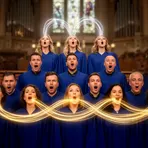
To sing a high extra melody above the main tune
How Prominent
- Specialized

- Specialized
 1
7.9
1
7.9

- Specialized
7
4.2
30
3.8
Surface Forms
Morphology
The lexical verb 'descant' already encodes the action of singing/playing a counter-melody, and the preposition 'on' simply marks the target (e.g. descant on a tune). The meaning is directly compositional and follows a common verb + on pattern, so a B1 learner who knows both constituents would be able to infer the MWE's meaning.
Etymology
Descant on comes from singing: a descant is a high, extra melody sung above the main tune, and singers would 'descant on' when they added that bright extra line. So the phrase means 'to sing or play an extra line over the main melody'.