
dervish
 7
9.9
7
9.9

- noun
- /ˈdɜrvɪʃ/
- The young man sought the guidance of a dervish, hoping to find peace through the spiritual teachings.
Examples
-
We can not leave you here, dervish.
-
I want you to sing with rapture and dance like a dervish. " -
-
I want you to... sing with rapture and dance like a dervish.
-
We whirl like a dervish among the statuary of the customers and bank employees.
Fiction book (1991) -
Be a dervish worthy of the holiness of this dargah.
-
Sometimes a dervish's cup has what cannot be found in a medicine man's tray.
-
Outside the tent, more Dervish warriors have gathered to catch a glimpse of their revered leader.
Fiction book (2002) -
HARRY brushes past the crowds of DERVISH WARRIORS, his eyes fixed on the fortress gates ahead.
Fiction book (2002) -
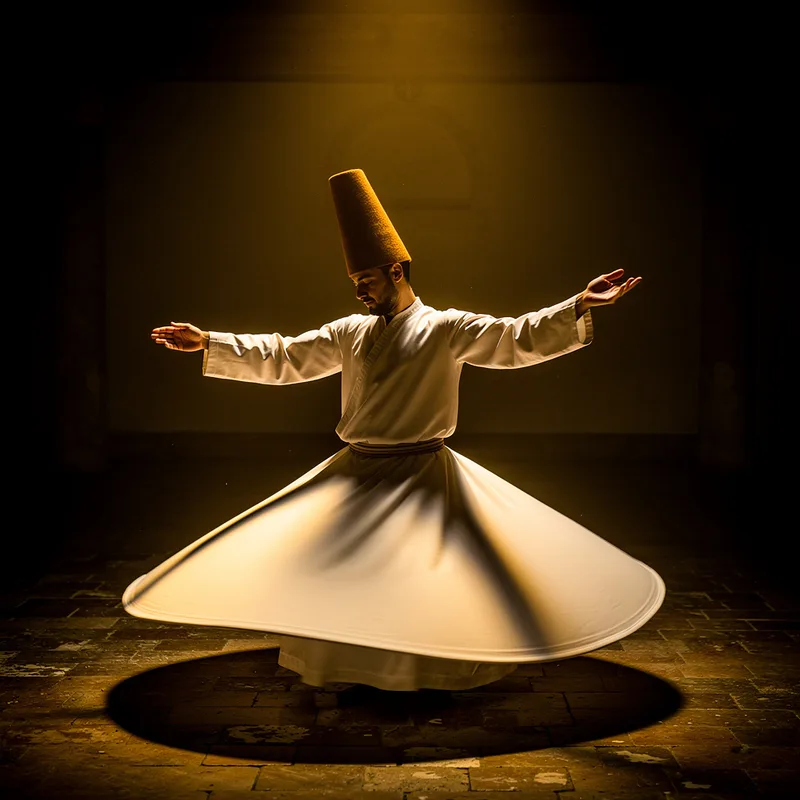
The dervish twirled gracefully in the center of the plaza, captivating the onlookers with his devotion.
-
During the festival, many dervishes performed their sacred whirling dance, celebrating their spiritual beliefs.
Synonyms
 2
9.0
2
9.0
A Muslim who follows a mystical tradition in Islam seeking a direct personal experience of God
 1
9.9
1
9.9
A person who spins in circles as a religious dance
A member of a Sufi group who spins in a religious dance to feel close to God
Compounds
Surface Forms
Etymology
Dervish comes from the Persian word darvīsh, which meant 'poor' or a humble holy person. Many Sufi dervishes lived simply and used whirling and chanting as prayer, so the old meaning explains why the word now names these spiritual, often dancing, religious followers.