
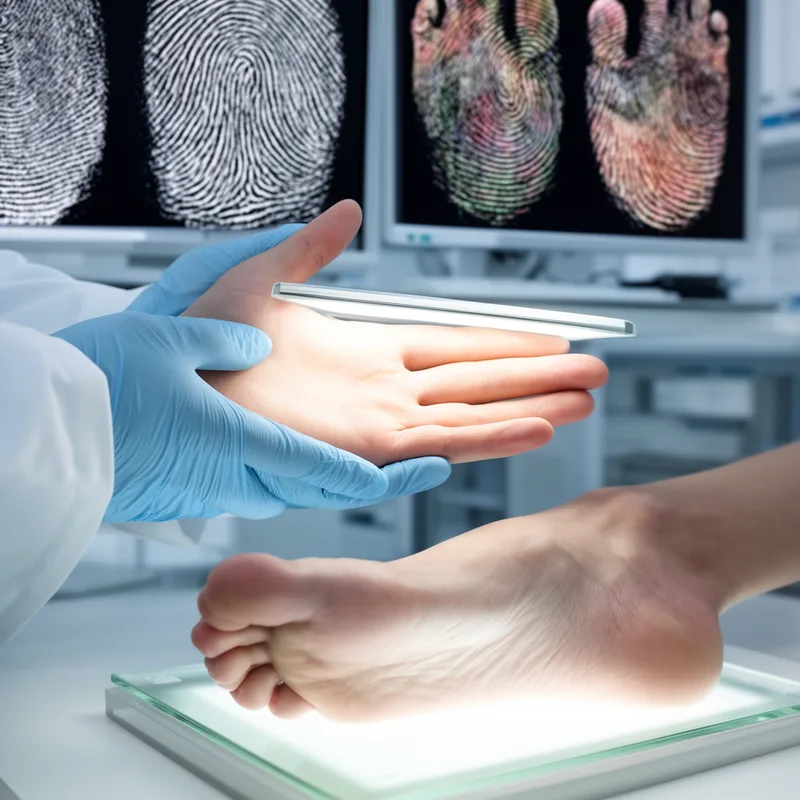
dermatoglyphics


 1
9.9
- noun
- /ˌdɜrməˈtɒɡlɪfɪks/
- Specialized
- Researchers in dermatoglyphics analyze finger patterns to study genetic traits.
Examples
-
Fingerprints were taken of the right and left hands of all of the twins according to the techniques described by Hauser (1990) and the American Dermatoglyphics Association (ADA: 1990).
Academic text (2000) -
Thus, for the twins concordant for sexual orientation, the null hypothesis that there are no differences in dermatoglyphics between twins cannot be rejected.
Academic text (2000) -
The scientist specializing in dermatoglyphics collected data from various populations to compare ridge patterns.
-
In forensic investigations, experts use dermatoglyphics to identify individuals based on their unique fingerprints.
Surface Forms
Morphology
dermatoglyphics = dermatoglyphic (semi-transparent) = dermato + glyph + ics
Formed by the combining elements 'dermato-' (skin) + 'glyph' and the field-forming suffix '-ics'; the structure is analyzable but uses technical Greek combining forms unfamiliar to many learners.
Etymology
Dermatoglyphics comes from Greek parts derma meaning 'skin' and glyph meaning 'carving' or 'mark', the same derma in dermatologist and glyph in hieroglyph. So, dermatoglyphics is the study of 'skin marks', which describes the patterns on fingerprints, palms, and the soles of the feet.