
dermatoglyphic


 1
9.9
- noun
- /ˌdɜrməˈtɒɡlɪfɪk/
- Specialized
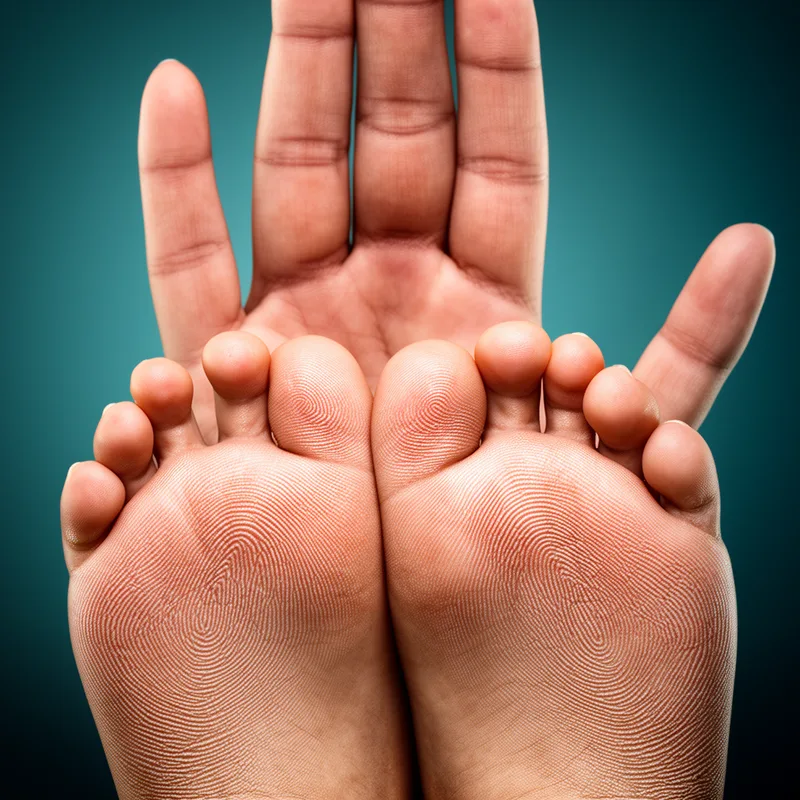
- Researchers found that dermatoglyphic features on the palms and soles develop early in pregnancy and can vary significantly between individuals.
Examples
-
This study applies the dermatoglyphic model described above to investigate the hypothesis that the expression of sexual orientation in females is influenced by second trimester prenatal environmental factors.
Academic text (2000) -
The study revealed that dermatoglyphic patterns, including the unique lines on our fingertips, can be used in forensic identification.
-
Because monozygotic twins presumably have identical genes, any dermatoglyphic differences between them must be due to differences in prenatal environmental experiences.
Academic text (2000) -
The research involved a dermatoglyphic analysis of finger ridge count in two groups of female monozygotic twins: a study group which was discordant for sexual orientation, and a control group which was concordant for sexual orientation.
Academic text (2000) -
Heterosexual twins account for the majority of subjects for which dermatoglyphic data has been collected, and the assumptions regarding high intratwin correlations have been made based on a largely heterosexual sample.
Academic text (2000) -
Thus, the existence of significant dermatoglyphic differences among female twins discordant for sexual orientation indicates that the prenatal environment of one twin was not identical to the prenatal environment of the other twin, despite the fact that both developed simultaneously within the same mother.
Academic text (2000) -
In the study presented here, monozygotic twins concordant and discordant for sexual orientation were assessed for the dermatoglyphic trait total finger ridge count (TFRC).
Academic text (2000) -
Dermatoglyphic traits such as finger ridge count develop between the 10th and 17th weeks post-conception (Babler, 1991). Thus, they principally reflect events occurring during the second trimester.
Academic text (2000) -
Understanding dermatoglyphic characteristics is essential in fields like anthropology and genetics for tracing familial lineage.
Surface Forms
Morphology
dermatoglyphic = dermatoglyph (semi-transparent) = dermato + glyph + ic
Formed by adding the adjective suffix '-ic' to the technical compound 'dermatoglyph' (dermato- 'skin' + glyph 'carving'); understandable to those familiar with medical combining forms but likely unfamiliar to average learners.
Etymology
Dermatoglyphic comes from Greek parts derma meaning 'skin' and glyph meaning 'carving' or 'mark', like in hieroglyph. So dermatoglyphic describes the tiny 'carvings' or lines on our skin, such as fingerprints.