
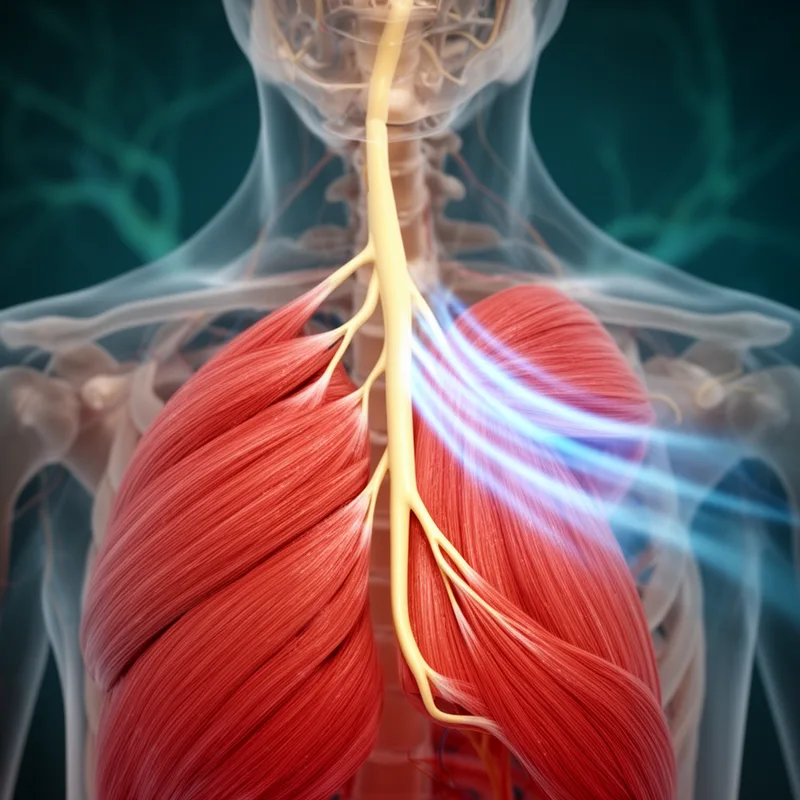
depressor nerve
- noun
- /dɪˈprɛsər nɜrv/
- Specialized
- The depressor nerve plays a key role in lowering the heart rate during rest.
Examples
-
Damage to the depressor nerve can result in increased muscle tone in the affected area.
-
The depressor nerve plays a crucial role in regulating muscle tone.
-
Researchers studied the function of a newly discovered depressor nerve in the digestive system.
-
Several depressor nerves are involved in the body's response to stress.
-
The depressor nerve helps to decrease the muscle tension in the face during relaxation.
-
When the depressor nerve is stimulated, it reduces the activity of the breathing muscles.
-
Injury to the depressor nerve can lead to an imbalance in muscle tone, affecting posture.
Synonyms


 1
8.5
1
8.5
A nerve that reduces the activity or tightness of a body part
Surface Forms
Morphology
The phrase is directly compositional: 'depressor' means an agent that depresses or reduces activity/tone and 'nerve' names the anatomical structure, so together they mean a nerve that reduces activity or muscle tone. This follows a standard agentive + noun naming pattern in technical English and is predictable for a learner who knows the constituent parts.
Etymology
Depressor nerve comes from the idea of a nerve that 'presses down' on activity. The word depressor means one that presses down and nerve is a body 'wire' that sends signals, so the name helps you remember it 'lowers' or 'reduces' the action of the part it connects to.