
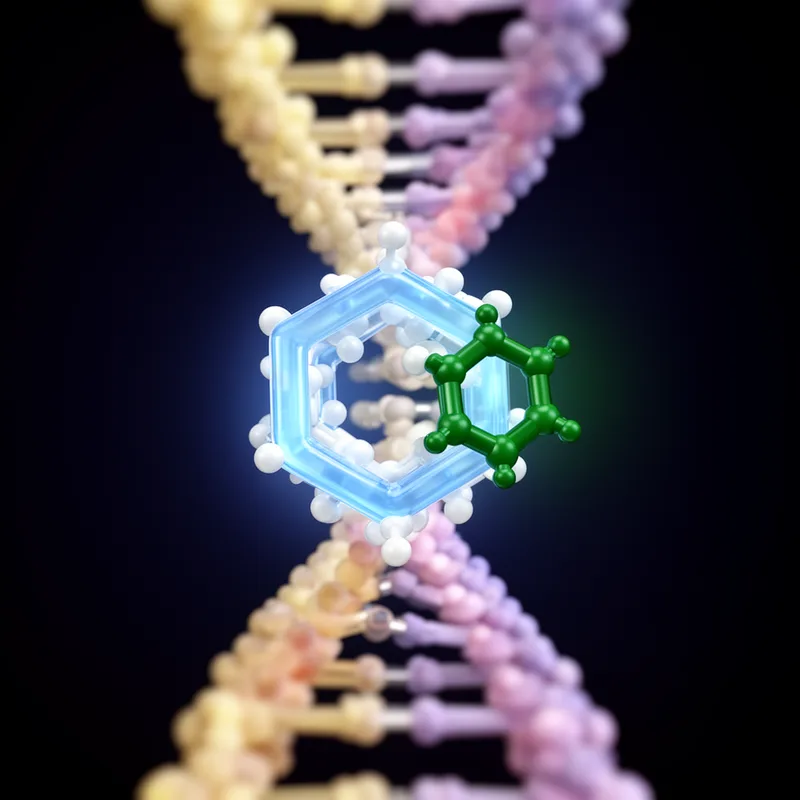
deoxyguanosine
- noun
- /diˌɒksɪˈɡwɑːnəˌsiːn/
- Specialized
- In DNA, deoxyguanosine pairs with cytosine.
Examples
-
Deoxyguanosine is one of the four main nucleosides found in DNA.
-
Certain chemical reactions can modify deoxyguanosine, leading to mutations in genetic material.
-
Researchers measured the amount of deoxyguanosine in the DNA samples to assess damage.
-
The structure of deoxyguanosine is crucial for DNA stability.
-
Deoxyguanosine is a crucial nucleoside that contributes to the structure of DNA.
-
Scientists discovered that deoxyguanosine levels can impact the stability of genetic information.
-
The pairing of deoxyguanosine with cytosine is essential for DNA replication.
Compounds
- Specialized
A building block of DNA made of a sugar, a phosphate, and the base guanine
Surface Forms
Morphology
Etymology
Deoxyguanosine breaks into deoxy- meaning 'without oxygen' and guanosine from guanine, a base first found in guano, a word for bird droppings. So deoxyguanosine is guanine attached to a sugar that is 'without oxygen', which is why it is a main building block of DNA.

