
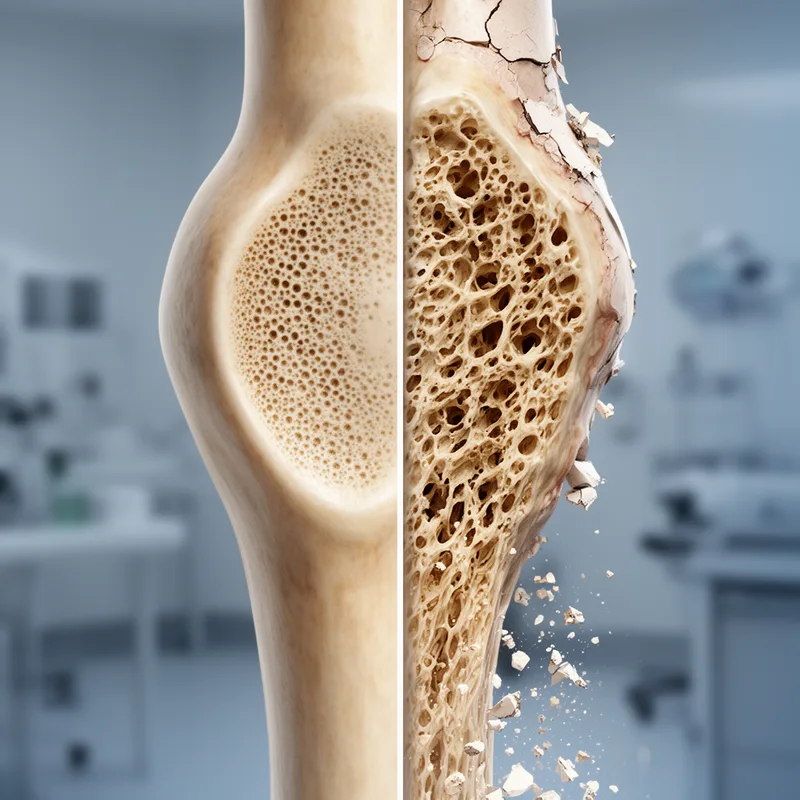
deossification
- noun
- /diˌɑsɪfɪˈkeɪʃən/
- Specialized
- A lack of calcium can lead to deossification and weakened bones.
Examples
-
Researchers are studying ways to prevent deossification in elderly patients.
-
Chronic kidney disease may accelerate the deossification of the skeletal system.
-
The process of deossification can lead to weakened bones.
-
What causes deossification in older adults?
-
A lack of calcium can lead to deossification and weakened bones.
-
Chronic kidney disease may accelerate the deossification of the skeletal system.
-
Researchers are studying ways to prevent deossification in elderly patients.
Synonyms


 1
8.3
1
8.3
Loss of calcium from bones or teeth that makes them weak
A loss of minerals like calcium from bones that makes them weak
Loss of minerals from bones or teeth that makes them weak
How Severe

Surface Forms
Morphology
deossification = deossify (semi-transparent) = de + oss + ify + ation
If a learner knows the verb 'deossify', adding '-ation' straightforwardly forms the noun for the process or result.
Etymology
Deossification breaks into de- 'remove' and oss 'bone', and it is the opposite of ossify ('to turn into bone'). So deossification means bones losing their minerals and becoming weaker.