
deontic


 1
9.9
1
9.9
- adjective
- /diˈɒntɪk/
- Specialized
- He refers to his own soul as "perfect." "Shall" in line 31 is a deontic modal marking intentionality, which is to say that in the discourse between Othello's parts, title, and soul, Othello has the ability to reveal himself as he truly is, a man of worth and character.
Examples
-
The rational recognition of others takes, instead, the form of deontic constraints on one's liberty to use others.
Academic text (1990) -
The rules of the game include several deontic permissions and prohibitions that players must follow.
-
And so let's start with the idea of deontic concepts.
-
And so Marx thinks that the ideas, the deontic ideas of rights.
-
The deontic system is thematized in the narrative structure described by Propp: **32;315;TOOLONG.
Academic text (1992) -
Consequentialists instead hold that the deontic status of an act depends on the agent's evidence regarding the probabilities of various outcomes at the time of acting.
Blog text (32) -
Dolezel distinguishes four types of global modal restrictions: alethic, deontic, axiologic, and epistemic.
Academic text (2006) -
(ii) MOF's second objection is that if the future is unsettled, then (consequentialism implies) at no time can an act have a settled deontic status, since it remains an open possibility that some overwhelmingly good or bad effect is yet to come about.
Blog text (32) -
A central motivation for this shift is to render judgments about particular acts less directly subject to any utilitarian calculus and thereby to provide these local judgments with a greater deontic coloration.
Academic text (1990) -
If the consequentializing folks are right, then presumably the deontic verdicts of all substantive normative theories are coextensive (despite differences in the relevant reasons for each theory).
Blog text (34)
Synonyms
 1
9.9
1
9.9
About moral rules that say an action is right or wrong no matter the result
Compounds

Surface Forms
Morphology
deontic = deont + ic
Formed from the Greek combining form 'deont-' (duty) + the adjective suffix '-ic'; the combining form is not a standalone English word, so the relation to 'duty/obligation' is not transparently recoverable by a typical B1 learner.
Etymology
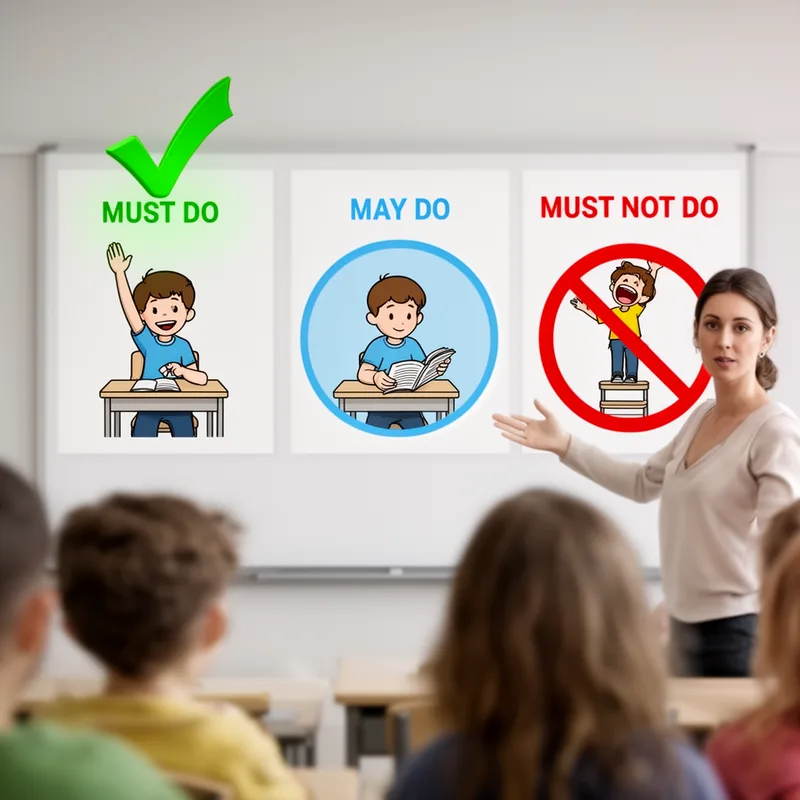
Deontic comes from the Greek root deon, which means 'duty' or 'what must be done'. A helpful way to remember it is to think that deontic words show duty, permission, or what is not allowed, so they tell you what people 'must' or 'may' do.