
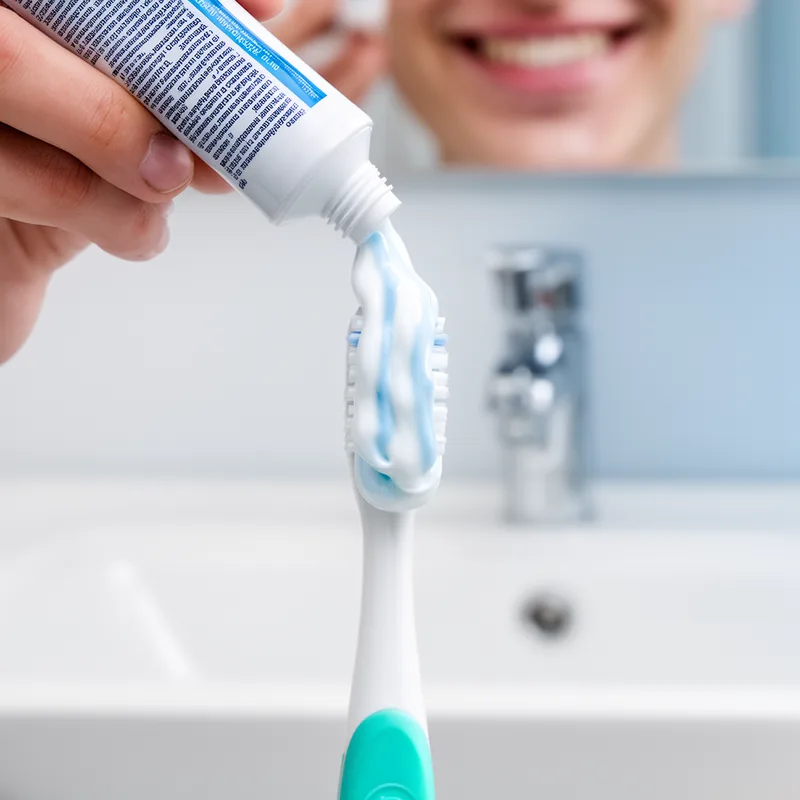
dentifrice


 1
9.2
1
9.2
- noun
- /ˈdɛntɪfrɪs/
- Specialized
- When, in 1960, Crest became the first dentifrice to be certified by the American Dental Association, its sales doubled by 1961 and tripled by 1962, making it the nation's top-selling brand.
Examples
-
It's like dentifrice for toothpaste.
-
"Plaque reduction with dentifrice was 57.35% and without dentifrice was 66.19%."
Blog text (16) -
I love your dentifrice -
-
Better yet, maybe have a friend go along to buy said dentifrice.
Blog text (27) -
"Plaque reduction with dentifrice was 57.35% and without dentifrice was 66.19%."
Blog text (16) -
A small incentive (i.e., a toothbrush and dentifrice) should be offered to increase participation.
Academic text (1990) -
Years of fluoridated water, decay-preventive dentifrices, and orthodontia had worked their magic.
Fiction book (1991) -
"Dentifrice use does not enhance plaque removal when used in conjunction with a toothbrush, and instead, may marginally lessen the brushing effect."
Blog text (16) -
Many dentists recommend using a fluoride-based dentifrice to help protect your teeth from decay.
-
She always carries a travel-size tube of dentifrice in her bag for brushing her teeth on the go.
Synonyms
 100
1.0
100
1.0
A thick soft paste you put on a toothbrush to clean teeth
 1
3.3
1
3.3
A powder used to clean teeth instead of toothpaste
A powder used to clean teeth instead of toothpaste
Surface Forms
Morphology
dentifrice = denti + frice
The element 'denti-' suggests 'tooth' (familiar from dental/dentist) but the second element is not a productive English morpheme and the whole word is a learned Latin borrowing, so the meaning is not fully derivable by an average learner.
Etymology
The word dentifrice comes from Latin parts that mean 'tooth' and 'to rub'. Dent- means 'tooth', the same root as in dentist and dental, and -frice comes from a word meaning 'to rub', so a dentifrice is a paste you use to rub and clean your teeth.