

denominator
 30
3.9

- noun
- /dɪˈnɑːmɪneɪtər/
- Specialized
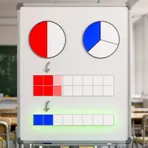
- In the fraction 3/4, the denominator is 4, which shows that the whole is divided into four equal parts.
- a common denominator
- least common denominator
- numerator and denominator
Loading YouTube…
Watch on YouTubeAnd we the denominator is all possible events.
- And we the denominator is all possible events.
- And then we leave the square root of the denominator as it is.
- There has to be a reason why those small primes appear in the denominator.
Examples
-
That's the denominator in all of my F ratios.
-
Who can tell me the difference between the denominator and the numerator?
-
Again, when little R gets large, the denominator becomes one.
-
And then we leave the square root of the denominator as it is.
-
Now, who can find the common denominator of this equation?
-
Now, the first thing we need to figure out is what's the common denominator.
-
Then once I have the same denominators, I can combine them, right?
-
So you have to multiply your numerator and your denominator by your LCD.
-
However, because obtaining such a denominator would be difficult, we used a hospital-based denominator to approximate the incidence.
Academic text (2013) -
We used control-group data as the denominator to calculate relative incidence and mortality rates of CRC.
Academic text (1996)
Compounds

- Specialized

 1
3.7
A number that is a common multiple of the bottom numbers of two fractions for adding or comparing them
Surface Forms
Morphology
denominator = denominate (opaque) = denominate + or
Although formed by suffixation from 'denominate', the specialized mathematical sense 'the number below the line in a fraction' is not directly inferable from 'to name' for an average B1 learner.
Etymology
Denominator comes from Latin parts de- ('down' or 'from') and nomen ('name'). So the denominator is the number that 'names' how many equal parts the whole is divided into and sits below the line in a fraction.