

deltoid tuberosity
- noun
- /ˈdɛl.tɔɪd ˌtjuː.bəˈrɒs.ɪ.ti/
- Specialized
- The deltoid tuberosity is an important landmark for muscle attachment in the upper arm.
Examples
-
A fractured humerus near the deltoid tuberosity can affect arm mobility.
-
Surgeons must be careful not to damage the deltoid tuberosity during orthopedic procedures.
-
The deltoid tuberosity is an important landmark on the humerus.
-
Athletes often develop strength at the deltoid tuberosity.
-
The deltoid tuberosity serves as the attachment point for the deltoid muscle on the humerus.
-
In an anatomy class, we learned that the deltoid tuberosity is crucial for understanding shoulder mechanics.
-
Physical therapists focus on the deltoid tuberosity when assessing shoulder injuries and strength.
Synonyms


 1
9.8
1
9.8
A rounded bump on a bone where a muscle or ligament can attach
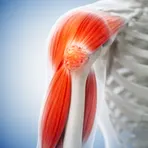
A raised area on the outer part of the upper arm bone where the shoulder muscle attaches
Surface Forms
Morphology
The compound combines 'deltoid' (the shoulder muscle) with 'tuberosity' (a bony prominence for muscle attachment), so a learner who knows both constituents can infer it refers to the bony prominence where the deltoid attaches. This type of anatomical noun-noun composition is regular and cross-linguistically common, making the meaning compositional and transparent despite being technical.
Etymology
Deltoid tuberosity comes from two words: deltoid (the triangle-shaped shoulder 'muscle') and tuberosity (a rough 'bump'). It is the rough spot on the upper arm bone where that muscle 'attaches', so the name helps you picture the muscle holding on to a bump on the bone.