
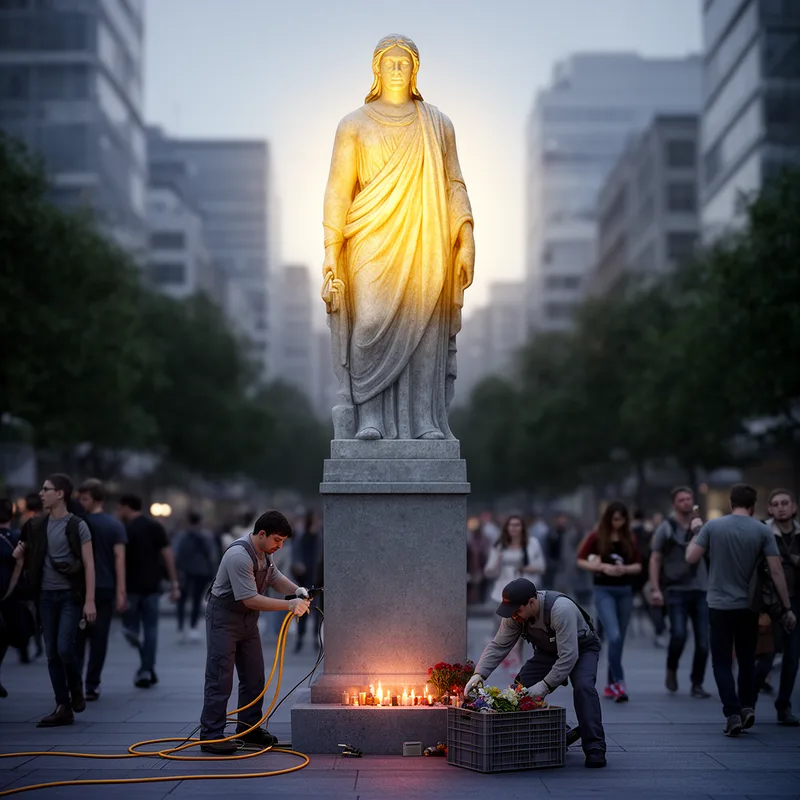
deicide


 1
9.9
- noun
- /ˈdeɪɪˌsaɪd/
- Formal
- Some activists argue that certain political movements embody deicide, aiming to overthrow established religious beliefs.
Examples
-
The philosopher's writings often explored themes of deicide, questioning the validity of divine authority in modern society.
-
The revolution wasn't deicide, just that it wanted to replace the Catholic frames that were the main support of the oppressive class of the nobles.
Blog text (29) -
The new catechism rejects the charge of deicide and reaffirms God's covenant with the Jews, as well as the validity of the Hebrew Bible and Jesus' life as a Jew.
Academic text (1996) -
The group's ideology was rooted in deicide, as they sought to dismantle the influence of traditional religions.
Surface Forms
Morphology
Etymology
Deicide can also be used in a figurative way to mean the rejection or destruction of a god's power or influence. The word comes from Latin deus 'god' and -cide 'to kill', so it can mean a literal killing or a symbolic 'killing' of divine authority.