
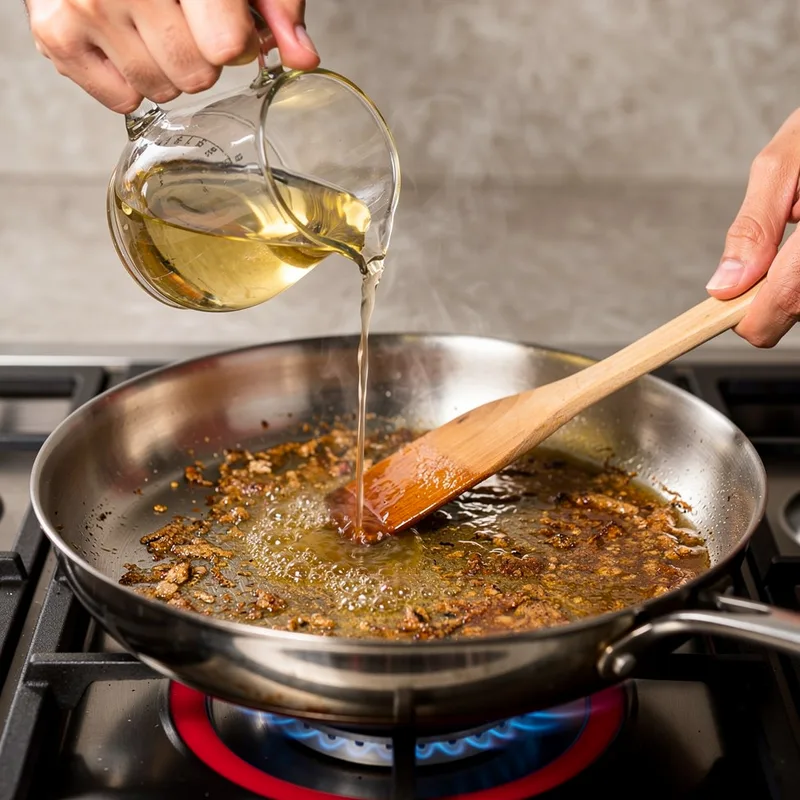
to deglaze
 2
7.5

- verb
- /dɪˈɡleɪz/
- Specialized
- With a wooden spoon, she rubs the pan to deglaze the caramelized sugar on the bottom.
- deglaze the pan
- deglaze the skillet
- deglaze with wine
Examples
-
Deglaze the pan with some wine and add back the rest of the liquid.
Blog text (7) -
Deglaze the pan with sherry and whisk in reserved vegetable broth and chicken broth.
Blog text (18) -
I'm going to deglaze with a little white wine.
-
If you have some white wine about, add a splash and deglaze the pan.
Blog text (34) -
Deglaze with the port and vinegar.
Blog text (5) -
Anyway, throw the minced shallot and garlic into the pan and sauté it around for a minute, and then throw in about 1/4 cup of chicken stock to deglaze the pan.
Blog text (23) -
She thought the balsamic vinegar smelled funny, but the instructions were clear about deglazing the pan where she browned the little pork tenderloins.
Fiction book (1996) -
To make a rich sauce, add some stock and deglaze the pan, scraping up the flavorful bits.
-
After frying the chicken, pour in the broth to deglaze the pan and enhance the sauce.
-
I usually deglaze the skillet with red wine after cooking vegetables to add depth to my dishes.
Surface Forms
Morphology
Etymology
Deglaze comes from the parts de- ('remove') and glaze (a 'shiny coating', like the sweet glaze on a doughnut). So in cooking, to deglaze a pan is to 'remove' or loosen the browned 'glaze' by adding liquid so those bits become a tasty sauce.