
decretal


 1
9.9
1
9.9
- noun
- /dɪˈkriːtəl/
- Formal
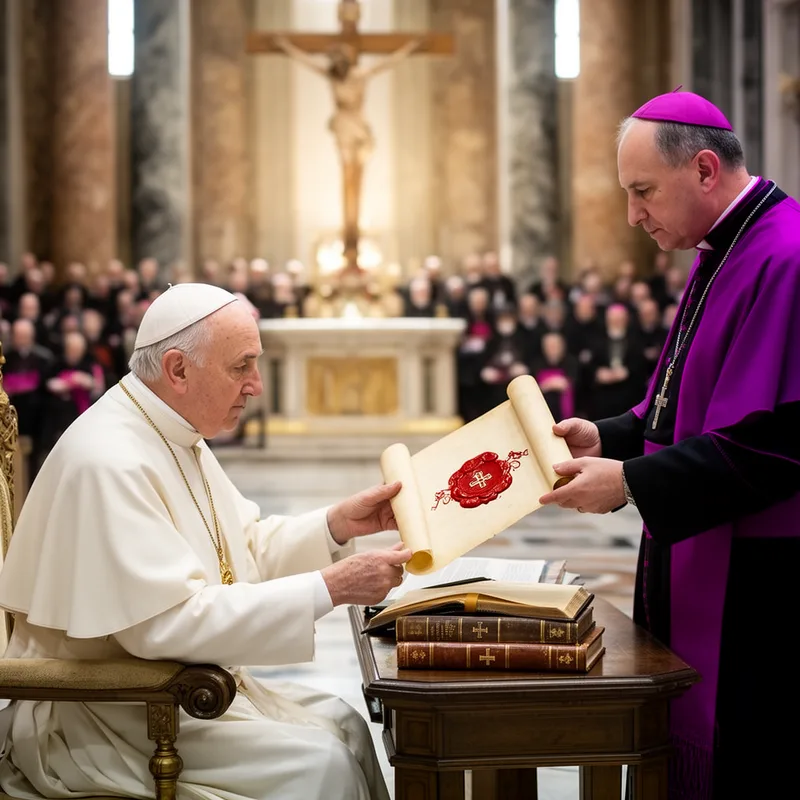
- In response to a complex moral issue, the pope issued a decretal addressing the concerns of the faithful.
Examples
-
The bishop referenced the ancient decretal to clarify the church's stance on marriage.
-
Peter Damian's experience of the Church led him to oppose the idea that bishops or popes stood above the law, a judgment justified by a forged collection of canon law popular with the clergy, the Pseudo-Isidorian Decretals.
Academic text (2004) -
The Donation of Constantine is the most famous forgery in European history and was discovered in the Pseudo-Isidorian Decretals in the 9th century (c. 847-853).
Blog text (30) -
To these must be added centuries of papal and episcopal magisterial pronouncements, as well as conciliar and synodal decretals.
Academic text (2008) -
Since the scholarly criticism of the fifteenth century, they have been known to be forgeries and have been called "Pseudo-Isidorian Decretals" or False Decretals to acknowledge that they are fraudulent.
Blog text (30) -
Since the scholarly criticism of the fifteenth century, they have been known to be forgeries and have been called "Pseudo-Isidorian Decretals" or False Decretals to acknowledge that they are fraudulent.
Blog text (30) -
The educational institution published a decretal outlining new guidelines for religious education.
Synonyms
 80
5.7
80
5.7
An official written order from a court or government that must be followed
 1
9.9
1
9.9
An official paper from the pope sealed with a lead seal
 1
9.9
1
9.9
An official written order or reply from an authority like a court

A formal official order given by a church or court

An official order made by someone in power
Surface Forms
Etymology
The word decretal comes from the Latin decretum, meaning 'decision', and is the same root as the common word decree. In church history a decretal became a pope's 'official letter' about church law, so it is an official papal decision or order.