
deconstructivism


 1
9.9
- noun
- /ˌdiːkənˈstrʌktɪvɪzəm/
- Specialized
Examples
-
It's underscored by destructive post-modernism, which seeks to apply Deconstructivism to the fabric of reality (Hey, go deconstruct gravity and jump off a building if you think objective reality is fake).
Blog text (26) -
The radical deconstructivism inherent in a loopy ladder that allows one to descend all the way down to the emptiest space and to climb back up harbors an immense creative power, but whether loop theorists can tap and control that force remains to be seen.
Academic text (2012) -
Thus, together with the postmodern wave of deconstructivism, the postcolonial critique of power gave the long-standing critique of the Eurocentric bias of UNESCO's understanding of "world heritage" a theoretical foundation.
Academic text (2009) -
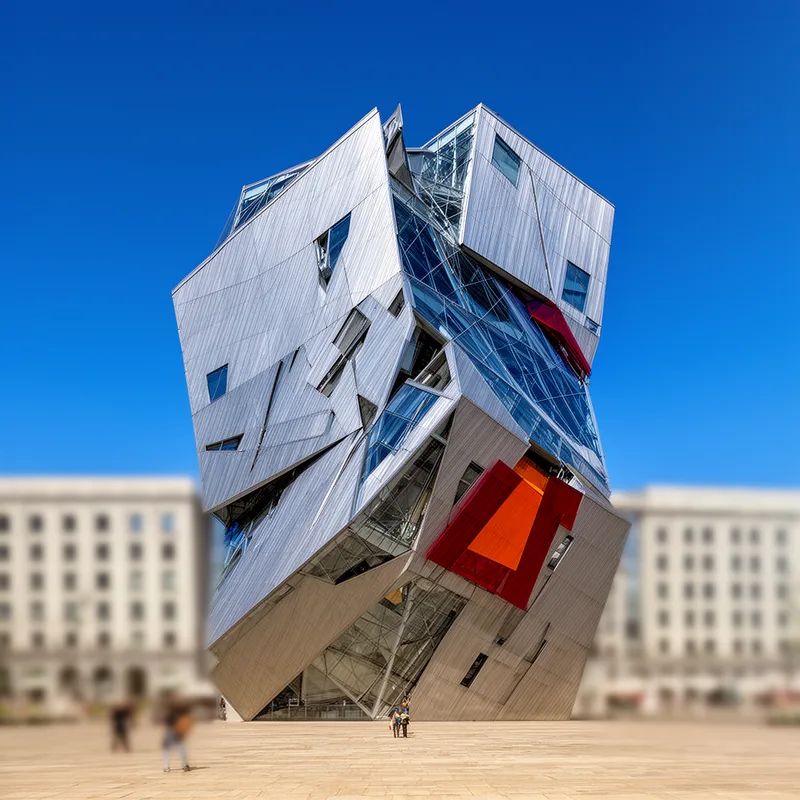
Deconstructivism challenges traditional architectural forms by embracing fragmentation and complexity in design.
-
The museum's design is a prime example of deconstructivism, featuring angular shapes and unexpected spaces.
-
Many architects today are inspired by the principles of deconstructivism, creating buildings that defy conventional structure.
How Fragmented

Surface Forms
Morphology
deconstructivism = deconstructive (semi-transparent) = de + construct + ive + ism
The formation from 'deconstructive' + '-ism' is regular, but the resulting term denotes a specific architectural movement tied to philosophical 'deconstruction', making the full meaning specialized rather than fully predictable.
Etymology
The word deconstructivism comes from de- ('take apart'), construct ('build'), and the ending -ism (a style or idea). So, deconstructivism is a style of architecture that looks like buildings have been 'taken apart' or broken up, which explains its fragmented, unusual shapes.