
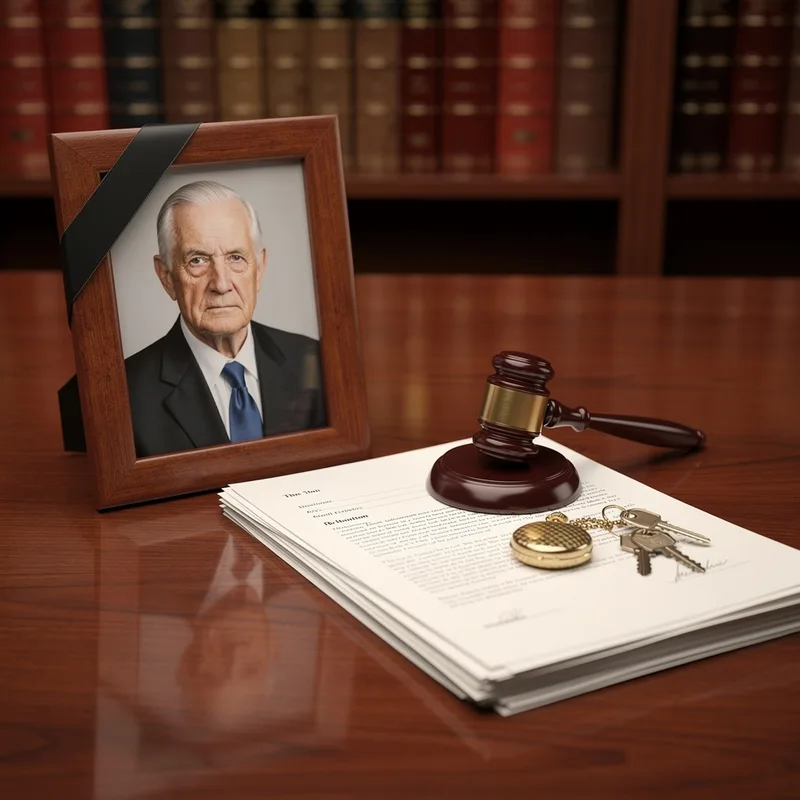
decedent
 16
9.8
16
9.8

- noun
- /dɪˈsiːdənt/
- Formal
- Careful review of the autopsy and exploration of the decedent's history and family history are two recommendations that are practical, pragmatic, and inexpensive.
- the decedent's death
- the decedent's family
- the decedent's location
Loading YouTube…
Watch on YouTubeSo yes, there's, we would still call gender, gender nonspecific and call them decedents.
- So yes, there's, we would still call gender, gender nonspecific and call them decedents.
- And then this is the decedent's essence spirit.
- And the question really is, is how far is the circle around the, the, the decedent?
- They didn't see a gun, but it appeared that someone had there was foul play based on the, the the face and of the of the decedent.
Examples
-
The objectives of our study were to describe the decedents, examine the circumstances of death, and identify measures to prevent future tornado-related fatalities.
Academic text (2013) -
According to the will, the estate of the decedent will be divided among his children.
-
They can pick and choose assets in the decedent's estate to do that.
-
Had he done so, he would have learned that the decedent was a convicted felon who had died peacefully while out on parole.
Fiction book (1994) -
In McCarty v. Workmen's Comp. App. Board, the decedent was killed while driving home from the office Christmas party.
Blog text (31) -
In a nutshell, probate is a legal process by which a decedent's assets are transferred and debts paid.
Blog text (7) -
The mean age of decedents was 50.7 years, with the youngest decedent being aged 4 days and the oldest being aged 97 years.
Academic text (2013) -
Of the 247 decedents, 29 (11.7%) were younger than 18 years.
Academic text (2013) -
The lawyer presented evidence regarding the wishes of the decedent during the hearing.
-
During the investigation, they confirmed the identity of the decedent through dental records.
Synonyms
 99
1.0
99
1.0
A person who is no longer alive
 3
6.3
3
6.3
A person who has died
 3
2.1
3
2.1
A person who is dead
 1
4.3
1
4.3
A person who has died
 1
4.8
1
4.8
A person you loved who has died
Antonyms

Surface Forms
Etymology
Decedent comes from Latin parts de- and ced-, which mean 'away' and 'to go'. It is the same idea as in the word deceased ('gone away'), so a decedent is the person who has died.