
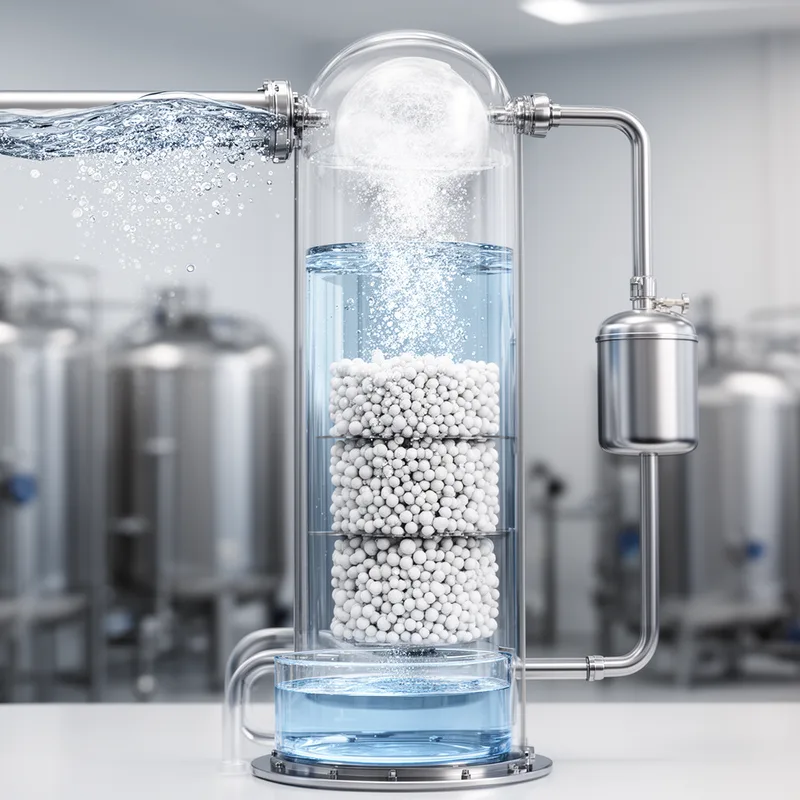
to decarbonate
- verb
- /ˌdiːˈkɑːrbəneɪt/
- Specialized
- After heating, the machine efficiently decarbonates limestone by releasing carbon dioxide.
Examples
-
The engineers worked to decarbonate the water before it entered the main supply system.
-
You must decarbonate the solution before testing it.
-
Certain industrial processes must decarbonate minerals to reduce their carbon footprint.
-
The laboratory decarbonated the samples carefully.
-
The engineers worked to decarbonate the water to ensure it was free from carbon dioxide.
-
In order to improve its purity, the chemist must decarbonate the solution carefully during the experiment.
-
Before bottling the beverage, the factory processes the liquid to decarbonate it and enhance its flavor.
Surface Forms
Morphology
Etymology
Decarbonate is made of de- meaning 'remove' and carbon, the same 'carbon' in 'carbon dioxide'. So, to decarbonate something is to 'remove carbon dioxide' from it, like taking the gas out of a rock or water.

