

to debark
 1
7.2
1
7.2

- verb
- /dɪˈbɑrk/
- The soldiers were instructed to debark from the transport ship at sunrise.
- passengers debark
Examples
-
They soon had the boat well up on the beach once Nithe, Myrddin, Anna, and Bear had debarked.
Fiction book (1991) -
All troops will debark for ground assault.
-
Mercifully, the actual flight would only take a tenth of the time it would take to debark the huge crowd.
Fiction book (2002) -
Essentially flu came back with a vengeance from Europe through the troops probably moving back and debarking at the port of Boston.
-
Having changed trains twice more since we left him, TIPTREE debarks at a deserted local stop.
Fiction book (1992) -
Interviewed this week after pulling into port at the island of Spitsbergen, she said one of her goals had been to debark on ice floes and measure them, but that it had been difficult to find any large enough to support her weight.
Blog text (8) -
It was Pauw who insisted as well on the inevitability of an ongoing and active degeneration in America, a point on which Buffon equivocated: no sooner did the Europeans debark.
Academic text (2003) -
They sailed out of New York Harbor on September 9 on the Walmar Castle, across the Atlantic Ocean, around the north of Ireland, and up the Firth of Clyde to Glasgow, where Hubble debarked on September 19.
Academic text (1990) -
All passengers must debark the aircraft before the next flight can board.
-
After the long journey, we finally debarked and set foot on the island.
Synonyms
 21
5.1
21
5.1
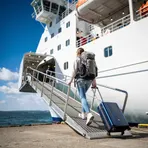
To leave a ship, plane, or other vehicle after a journey
 3
4.9
3
4.9
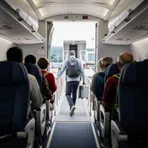
To leave a plane after it lands
Antonyms

How Formal

Surface Forms
Morphology
Etymology
Debark comes from the part de- meaning 'off' and is the opposite of embark, so it means to get 'off' a ship and is used for leaving a ship, plane, or other vehicle.