
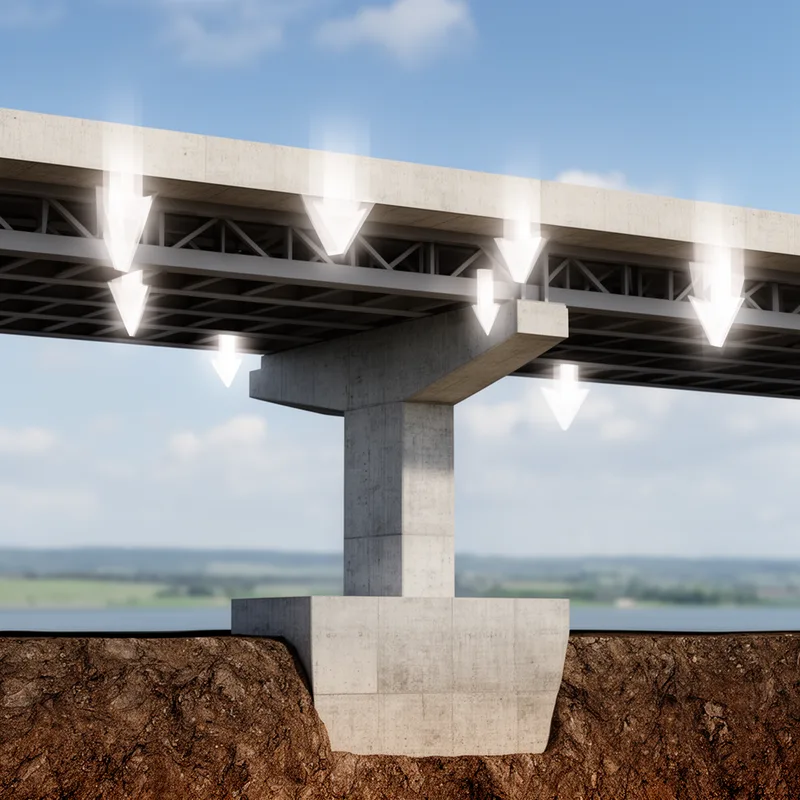
dead load
- noun
- /dɛd loʊd/
- Specialized
- The engineer calculated the dead load of the building to ensure it could support the weight of its own materials.
Examples
-
"The World Trade Center was designed as a tubular structure with the exterior walls carrying the vertical and horizontal dead loads," Gewain said.
Academic text (2001) -
To determine safety, the architect assessed the dead load of the roofing materials before construction began.
-
A proper evaluation of the dead load is crucial for the stability of any large structure.
Synonyms

 789
1.0
789
1.0

A measurement that shows how heavy something is
 4
3.2
4
3.2
The weight a structure or vehicle supports
Antonyms

How Heavy

Surface Forms
Morphology
The phrase is largely compositional: 'dead' here conveys non-moving or permanent, and 'load' denotes weight, so a learner who knows both words can infer a non-moving or permanent weight. However, the precise technical sense (i.e., the permanent weight of the structure excluding temporary or live loads) is specialized and not fully predictable for a B1 learner, so the item is only partially transparent.
Etymology
The term dead load comes from building work: dead here means 'fixed' or 'not moving' and load means 'weight', so it names the weight of the structure itself that is always there and must be carried.