
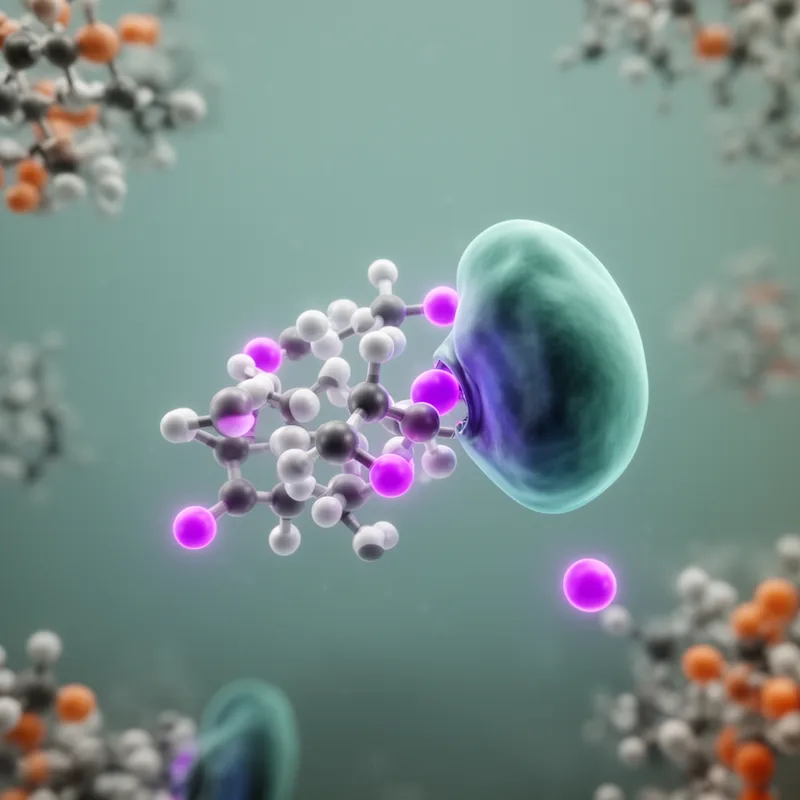
de-iodinating
- adjective
- /diːˈaɪəˌdeɪnˌeɪtɪŋ/
- Specialized
- A de-iodinating reaction occurs during the breakdown of certain pharmaceutical compounds.
Examples
-
Researchers are studying the effects of de-iodinating agents in metabolic pathways.
-
A de-iodinating reaction typically occurs when iodine is removed from organic compounds during metabolism.
-
The enzyme is responsible for de-iodinating thyroid hormones in the liver.
-
The process of de-iodinating the compound was successful.
-
Researchers are de-iodinating several samples for analysis.
-
Scientists discovered an effective de-iodinating catalyst that enhances the breakdown of halogenated substances.
-
The new formula is focused on de-iodinating pollutants to make them safer for the environment.
Antonyms
How Iodinated
- Specialized

- Specialized
Surface Forms
Morphology
de-iodinating = deiodinate (semi-transparent) = de + iodine + ate + ing
Forming the participle from 'deiodinate' by adding '-ing' is a straightforward grammatical step, but the underlying verb 'deiodinate' is specialized chemical vocabulary.
Etymology
The word de-iodinating breaks into de- and iodine, where de- means 'remove' or 'away' (as in defrost) and iodine was named for the 'violet' color of its purple vapor. So de-iodinating means 'removing iodine' from a compound.

