
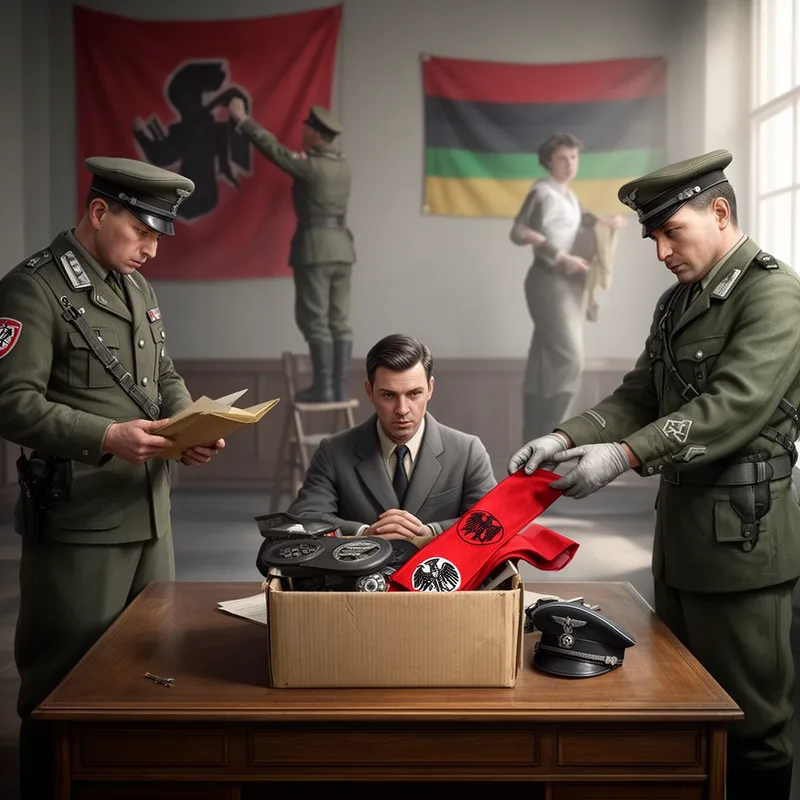
de-Nazification
- noun
- /diːˌnɑːzɪfɪˈkeɪʃən/
- The de-Nazification process took several years to complete.
Examples
-
De-Nazification involved screening officials for links to the Nazi Party.
-
Historians still debate the effectiveness of de-Nazification in postwar Europe.
-
The Allies implemented de-Nazification policies in Germany after the war.
-
Many officials were removed during the de-Nazification efforts.
-
The Allies implemented de-Nazification to ensure that Nazi officials could not regain power in post-war Germany.
-
After World War II, de-Nazification aimed to purge Nazi ideology from German society and education.
-
Many former Nazis were subject to de-Nazification processes, which removed them from government positions.
Synonyms

 1
9.9
1
9.9

Removing Nazis from power and stopping Nazi ideas in public life
Antonyms


 1
9.9
1
9.9
Making people and public institutions follow Nazi ideas and rules, for example in Germany before and during World War II
How Thorough
 5
6.7
5
6.7
Surface Forms
Morphology
de-Nazification = Nazification (semi-transparent) = de + Nazi + fication
If a learner knows 'Nazification', the prefix 'de-' clearly signals reversal or removal of that process.
Etymology
The word de-Nazification is made from the prefix de- meaning 'remove' and Nazi, so it literally names the process of removing Nazis and their ideas. That is why it was used after World War II to take Nazis out of power and reduce Nazi influence.