

day book
- noun
- /deɪ bʊk/
- UK
- The sergeant made sure every incident was logged in the day book before his shift ended.
Examples
-
Each morning, the chief inspected the day book to keep track of overnight arrests and activities.
-
When reviewing last week's day book, the officers noticed a pattern in the reported burglaries.
-
The officer wrote in the day book every evening.
-
Can you check the day book for yesterday's incidents?
-
Each morning, the chief inspected the day book to keep track of overnight arrests and activities.
-
The sergeant made sure every incident was logged in the day book before his shift ended.
-
When reviewing last week's day book, the officers noticed a pattern in the reported burglaries.
Synonyms

 12
3.3
12
3.3

A book where people write regular records of journeys, events, or activities
 8
7.4
8
7.4
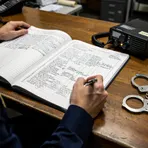
A daily record kept by a police station listing arrests and incidents
 3
7.4
3
7.4
A daily record of arrests and other events at a police station
How Official

Surface Forms
Morphology
The meaning is compositionally derived from 'day' (daily) + 'book' (a book/record), so a learner who knows both constituents can infer it refers to a book used for daily records of events. This is a common, cross-linguistic concept (diary/daybook/journal) even if the specific institutional use (police) is more specialized.
Etymology
The noun day book comes from the simple idea of keeping a book for each day at a police station, where staff wrote down arrests and incidents. That's why day book means 'a daily written record of events and activities', so police can quickly check what happened.