
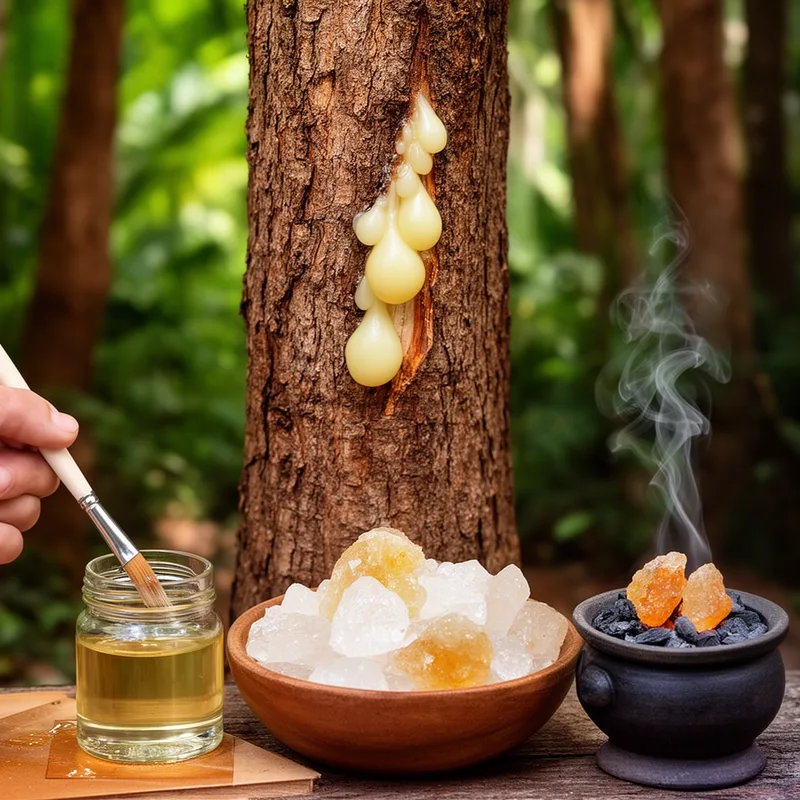
dammar resin
- noun
- /ˈdæmər ˈrɛzɪn/
- Specialized
- Artists sometimes use dammar resin to produce a glossy finish on oil paintings.
Examples
-
Traditional varnishes are often made with dammar resin as a key ingredient.
-
Many tree species in Southeast Asia are tapped for dammar resin.
-
The artist used dammar resin to create a glossy finish.
-
Many varnishes contain dammar resin for added durability.
-
Artists sometimes use dammar resin to produce a glossy finish on oil paintings.
-
Many tree species in Southeast Asia are tapped for dammar resin to extract its valuable properties.
-
Traditional varnishes are often made with dammar resin, providing a smooth and shiny surface.
Synonyms

 8
9.9
8
9.9

A hard, brittle material from trees used to make varnish and give a shiny finish
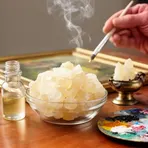
A hard pale material from certain trees used in varnish, incense, and to make paint shiny

A hard clear material from trees used to make varnish for paintings and wood
Surface Forms
Morphology
The compound 'dammar resin' is directly compositional: 'dammar' names a particular hard resin and 'resin' denotes the substance class, so the phrase simply refers to that type of resin. This noun+noun type-label pattern is common across languages, so a B1 learner who knows both constituents would readily understand the meaning.
Etymology
Dammar resin may come from the Malay word damar, which means the sticky sap that runs from certain trees. People collected that sap to make varnish and incense, so the name now refers to the pale tree 'resin' used for shiny finishes and incense.