
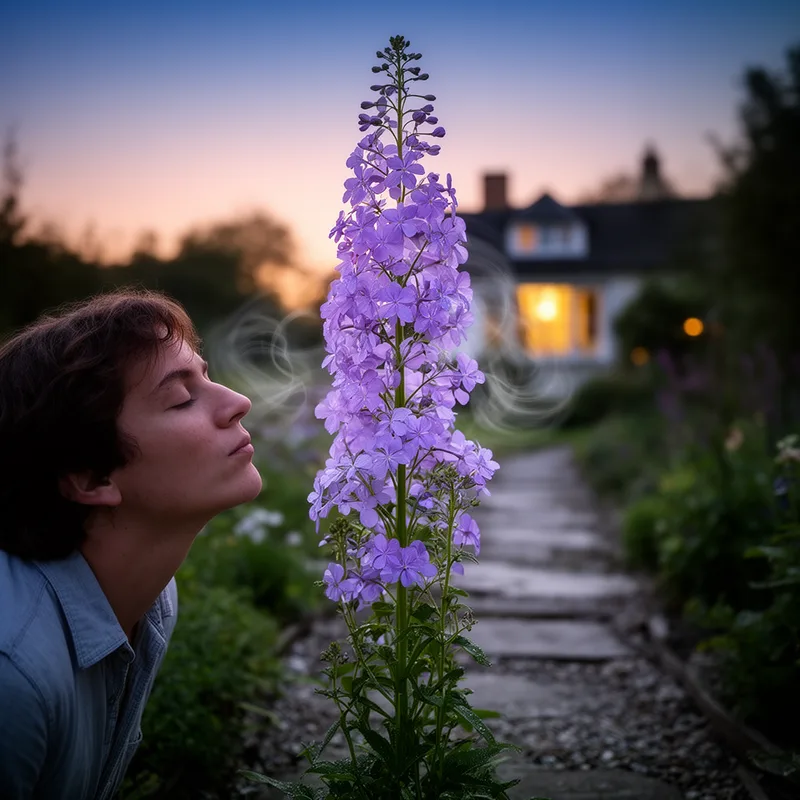
damask violet
- noun
- The damask violet releases a stronger fragrance as dusk falls.
Examples
-
Damask violet is often used in cottage gardens for its evening scent.
-
We planted damask violets along the walkway to enjoy their flowers in spring.
-
The damask violet blooms beautifully in the garden.
-
I planted several damask violets last spring.
-
Damask violet is often used in cottage gardens for its evening scent.
-
The damask violet releases a stronger fragrance as dusk falls.
-
We planted damask violets along the walkway to enjoy their flowers in spring.
Synonyms


 1
8.9
1
8.9
A tall garden plant with strong sweet-smelling purple or white flowers that smell at night

A plant from Europe and Asia that grows in gardens and wild places with sweet-smelling purple or white flowers
A plant that lives several years with sweet flowers that smell stronger in the evening
Surface Forms
Morphology
damask + violet
This is a simple attributive compound where 'damask' modifies 'violet' to indicate a particular variety or origin (literally a 'violet associated with Damascus' or a Damask-type violet). The meaning is compositional and follows a common modifier+noun pattern, so a B1 learner who knows both constituents can infer it denotes a kind of violet rather than an idiomatic meaning.
Etymology
Damask violet may come from the name for the city of Damascus: one popular story says the sweet-smelling flowers or their scent were brought from 'Damascus', so people began to call the plant 'damask'. That's why the name joins damask, the place, and violet, the flower, and now refers to a fragrant garden plant.