
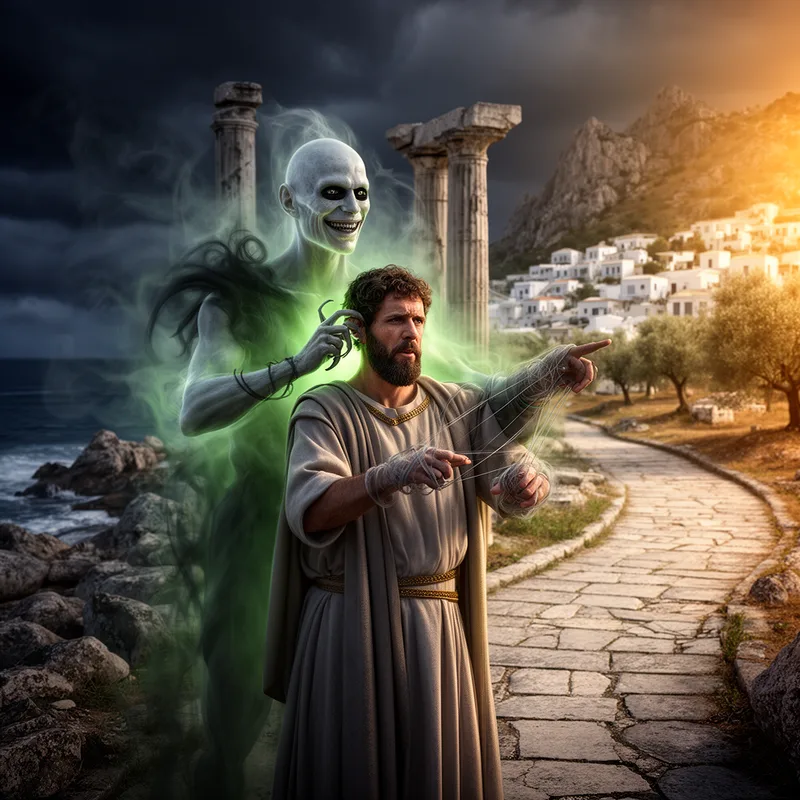
daimon


 1
9.9
1
9.9
- noun
- /ˈdeɪmən/
- Literature
- In ancient Greece, a daimon could influence a person's fate.
Loading YouTube…
Watch on YouTubeAnd we we hear something really gruesome about what Daimons end up, you know, in some cases having to do early on in the story.
- And we we hear something really gruesome about what Daimons end up, you know, in some cases having to do early on in the story.
Examples
-
Legends say that a malevolent daimon lurks in the shadows, preying on those who are weak-willed.
-
In the play, a malevolent daimon manipulates the fate of the protagonist.
-
Philosophers once debated whether a daimon was guiding Socrates' actions.
-
Some mythologies describe a daimon as a force that tempts people into evil deeds.
-
A daimon can influence our lives.
-
In ancient tales, a daimon often influenced the fates of heroes and caused chaos in their lives.
-
The ancient Greeks believed that each person had a personal daimon guiding their actions and choices.
Synonyms
 509
5.3
509
5.3
A harmful spirit that people believe can enter and hurt someone
 318
5.3
318
5.3
A powerful spirit that represents evil and tempts people
 18
9.9
18
9.9
An invisible spirit in Muslim belief that can appear as people or animals and affect humans
 15
8.8
15
8.8
An evil spirit that people believe harms others in stories
 1
9.9
1
9.9
A harmful spirit that causes trouble or fear

A harmful spirit that can take control of people and cause harm
A very powerful evil spirit that leads weaker spirits
How Powerful

Surface Forms
Etymology
Daimon comes from ancient Greek daimon, which meant 'spirit' or 'power', and it is the origin of the English word demon. Long ago it often named harmful spirits or lesser gods that affected people's lives, so that's why today demon usually means an evil spirit.