
daemon
 9
9.9
9
9.9

- noun
- /ˈdiːmən/
- Archaic
- Lord War is a daemon opposed to peace.
Loading YouTube…
Watch on YouTubeNow we do find out that there are ways to separate a daemon away from a person.
- Now we do find out that there are ways to separate a daemon away from a person.
- Prior to the Renaissance, the, OR maybe probably just doing the Renaissance, the, the concept of genius was a daemon that lived in the walls.
Examples
-
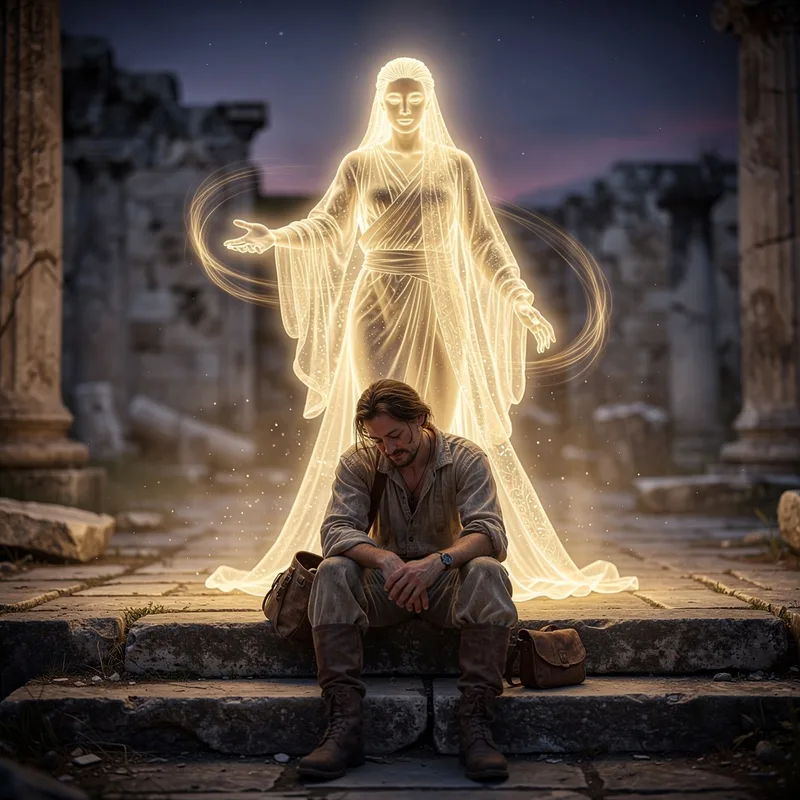
According to ancient mythology, every human is said to have a daemon that influences their actions and choices.
-
Velma: Why, that's a Daemon Ritus, an ancient object once used for sacred rituals here on the island.
Fiction book (2002) -
The Knight of Sorrows is a daemon opposed to happiness.
Blog text (2) -
The buzzing bee becomes the laughing artist, the wily flower his "clever Daemon."
Academic text (1998) -
I was wondering if you could comment on the part of Socrates speech where he portrays love as a daemon, as a mediator, an in between.
-
In Philip Pullman's 'His Dark Materials', a young girl's companion is her daemon, reflecting her inner feelings and personality.
-
In the story, the protagonist learns that their daemon takes the form of a fox, symbolizing cunning and adaptability.
Synonyms
 10
8.1
10
8.1
A person who is partly god and partly human with great powers


 1
9.9
1
9.9
A lesser god or a child of a god and a human in stories
 1
5.8
1
5.8
A character from traditional stories who has magical powers

A female figure in myths who is partly a god and has some magic powers
Surface Forms
Etymology
Daemon comes from the old Greek daimon, which meant a 'spirit' or 'lesser god' that could guide or watch over people. So a daemon in myths is a being between gods and humans, often acting as a guardian.