
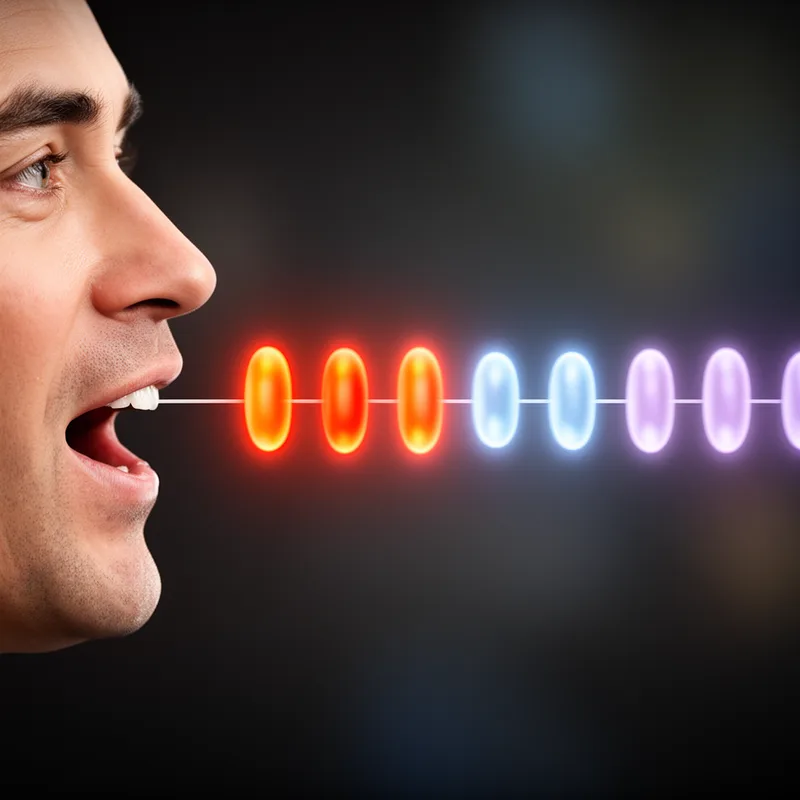
dactylic


 1
9.9
- adjective
- /dækˈtɪlɪk/
- Literature
- The famous poet Homer wrote the "Iliad" in dactylic hexameter, which is characterized by a specific pattern of stress.
- dactylic hexameter
- dactylic rhythm
Loading YouTube…
Watch on YouTubeSo you get a rhythm such as the dactylic hexameter, da, da, da, da, da, da, da, da, da, da, da, da.
- So you get a rhythm such as the dactylic hexameter, da, da, da, da, da, da, da, da, da, da, da, da.
Examples
-
So you get a rhythm such as the dactylic hexameter, da, da, da, da, da, da, da, da, da, da, da, da.
-
The Iliad, Also like the Greek epics, the Aeneid is written entirely in dactylic hexameter.
-
The stricter dactylic line returns at the end of the poem.
Academic text (2016) -
There is one interesting effect, however, in the weather and wind choruses of the prologue; the verses are usually in dactylic rhythm.
Academic text (2000) -
Prins presents Arnold as the champion of the accentual dactylic hexameter as crucially important for a modern English nation.
Academic text (2016) -
While most lines are in hexameters and are generally iambic, as above, sometimes—especially, for some reason, in the prologue—Kellgren uses dactylic rhythms.
Academic text (2000) -
Despite his willingness to play with verse forms imported from other languages, he scorned the accentual hexameter line conceived as a translation into English of the Greek dactylic hexameter.
Academic text (2016) -
But a passage of delicious opprobrium in the review of Arnold makes clear that Swinburne regarded the entire effort as a waste of time and the dactylic hexameter in English as a metrical monstrosity.
Academic text (2016) -
Whereas the recitative is mostly in hexameters, usually iambic in rhythm, occasionally dactylic, but used with a great deal of flexibility and freedom, the arias are almost always in fairly strict, even rigid, tetrameters.
Academic text (2000) -
"Hesperia" is a simulacrum of sound, at one or even two removes from an imagined original—just as the dactylic hexameter in English, a translation of a verse form into a language that cannot really accommodate it, must always be.
Academic text (2016)
Surface Forms
Morphology
Etymology
Dactylic comes from the Greek dactylos, meaning 'finger', and shares the same root as digit. In poetry a dactylic foot has one strong syllable followed by two weak syllables, so the name helps you remember a three-part beat — one long then two short.