
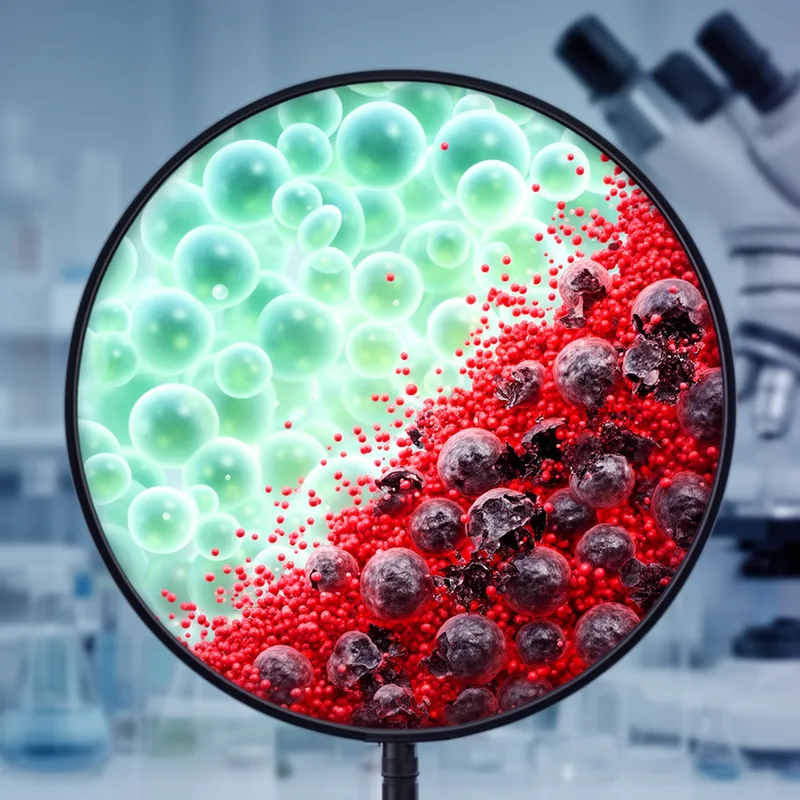
cytotoxicity


 1
9.2
- noun
- /ˌsaɪtəʊtɒkˈsɪsɪti/
- Specialized
- A low level of cytotoxicity in this compound makes it a safer alternative for use in treatments.
- cell cytotoxicity
Examples
-
In a few studies on CML experimental models, miR-30a enhanced imatinib-induced cytotoxicity and promoted intrinsic apoptosis of CML cells.
Academic text (2016) -
Therefore, measuring cytotoxicity is very valuable for identifying compounds that may cause certain health risks in vivo.
Academic text (2018) -
Modified natural polymers have attracted much attention because of their better biocompatibility and lower cytotoxicity compared with synthesized polymers.
Academic text (2018) -
The sMUA AuPAMAM constructs showed the highest stability, gene transfection efficacy, and a reasonable cytotoxicity profile.
Academic text (2018) -
Glutathione, along with other antioxidants, protected the isolated outer hair cells against this cytotoxicity, suggesting a free radical mechanism for aminoglycoside toxicity.
Academic text (1998) -
In cytotoxicity experiments, T cells lysed hepatocytes that expressed HBcAg, and this cytotoxicity could be blocked by antibody to HBcAg or by HLA class I molecules.
Academic text (1994) -
Measuring cytotoxicity helps researchers understand how certain drugs impact living cells.
-
The study focused on the cytotoxicity of various chemicals to determine their effects on cancer cells.
Synonyms
 38
7.2
How poisonous a substance is to people or animals
Antonyms

How Toxic

Surface Forms
Morphology
Etymology
Cytotoxicity combines cyto- meaning 'cell' and toxic meaning 'poison', like in the word toxin. So cytotoxicity is the 'poison' effect on living cells, and it tells us how harmful something is to cells.