
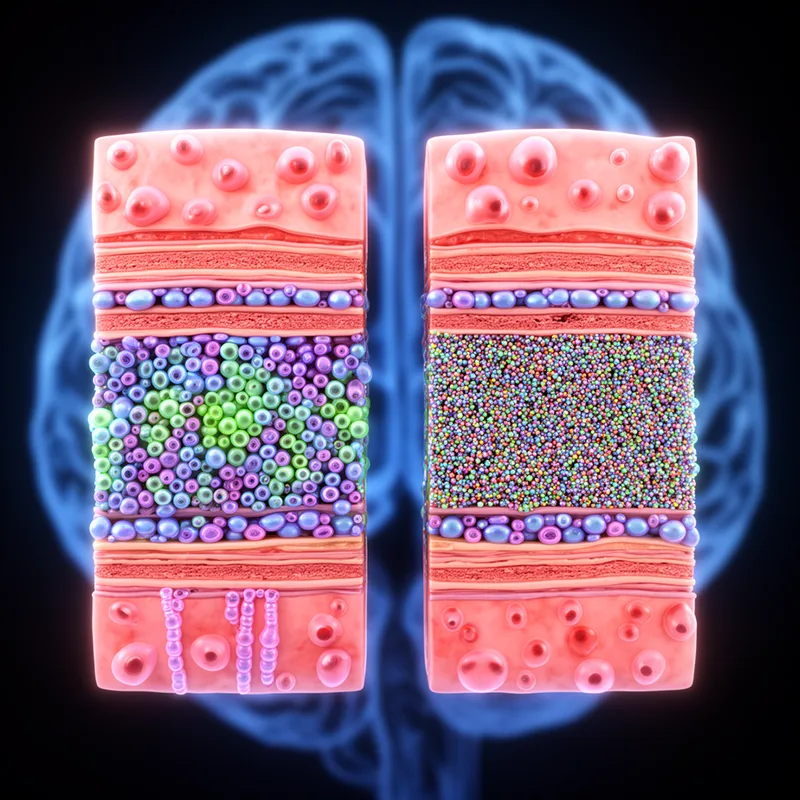
cytoarchitecture


 1
9.9
- noun
- /ˌsaɪtoʊˈɑrkɪtɛkʧər/
- Specialized
- Understanding the cytoarchitecture of an organ helps scientists determine how it performs its essential roles in the body.
Examples
-
Researchers studied the cytoarchitecture of various tissues to understand how cell arrangement affects their function.
-
Their cytoarchitecture is similar to the much older visual projection areas on the opposite pole of the brain.
Blog text (2) -
The sections were then mounted on gelatin-coated slides, allowed to dry for approximately 24 hours, and counterstained with 0.25% thionin for identification of the nervous tissue cytoarchitecture.
Academic text (2016) -
The cytoarchitecture of the human brain is incredibly complex and organized into distinct layers of cells.
Synonyms
The types and positions of cells in a body part, especially the brain
Surface Forms
Morphology
cytoarchitecture = architecture (semi-transparent) = cyto + architecture
The combining form 'cyto-' denotes 'cell' but is a specialized scientific prefix; combined with the common noun 'architecture' the overall meaning 'cellular architecture' is clear to those with scientific vocabulary but not to average B1 learners.
Etymology
The word cytoarchitecture combines cyto- meaning 'cell' and architecture, the same word used for buildings meaning 'how something is built'. So cytoarchitecture is the 'architecture of cells', the way cells are arranged and put together in a tissue or organ.