
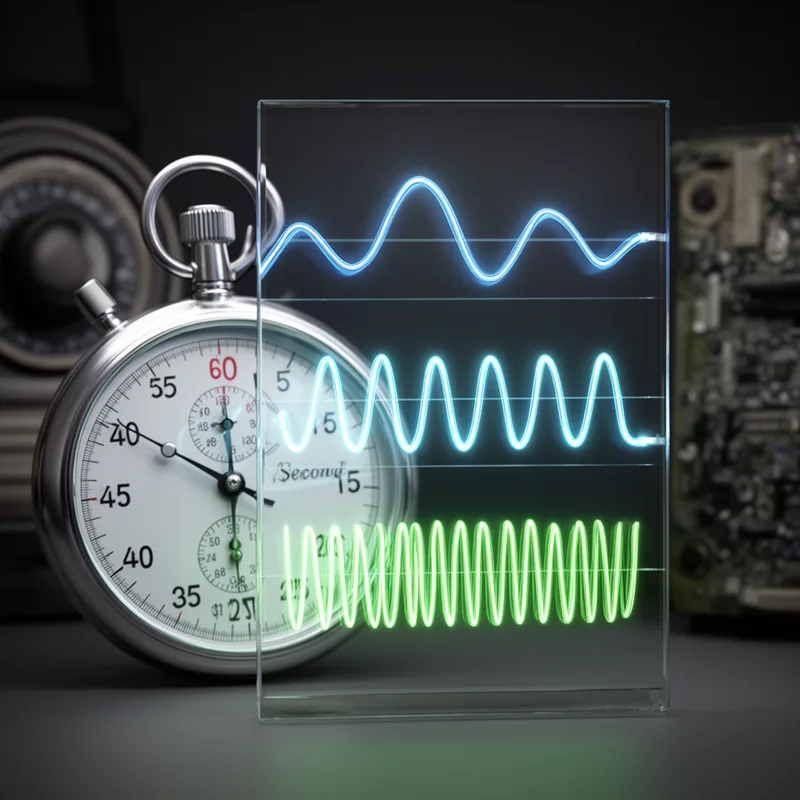
cycles/second
- noun
- /ˈsaɪkəlz ˈsɛkənd/
- Specialized
- The specification lists the signal frequency as 60 cycles/second.
Examples
-
A wave oscillates at 60 cycles/second.
-
Early radios were tuned to specific frequencies measured in cycles/second.
-
The clock in this computer runs at 3 million cycles/second.
-
The sound frequency is measured in cycles/second.
-
The clock in this computer runs at 3 million cycles/second.
-
The specification lists the signal frequency as 60 cycles/second.
-
Early radios were tuned to specific frequencies measured in cycles/second.
Synonyms

 19
8.0
19
8.0

A measure of frequency equal to one hertz
 7
3.7
7
3.7
A measure of how many times something repeats each second
 5
4.8
5
4.8
A unit for measuring how many times a sound or light wave repeats each second
 2
4.1
2
4.1
A unit for frequency equal to one complete cycle in one second
How Often

Surface Forms
Morphology
Etymology
Cycles/second is a literal phrase: it counts how many complete cycles, a 'full turn' or 'wave', happen in one second, which is 'one tick of time'. So it directly measures how often something repeats each second and is the same as one hertz.