
cyanotype
8.4
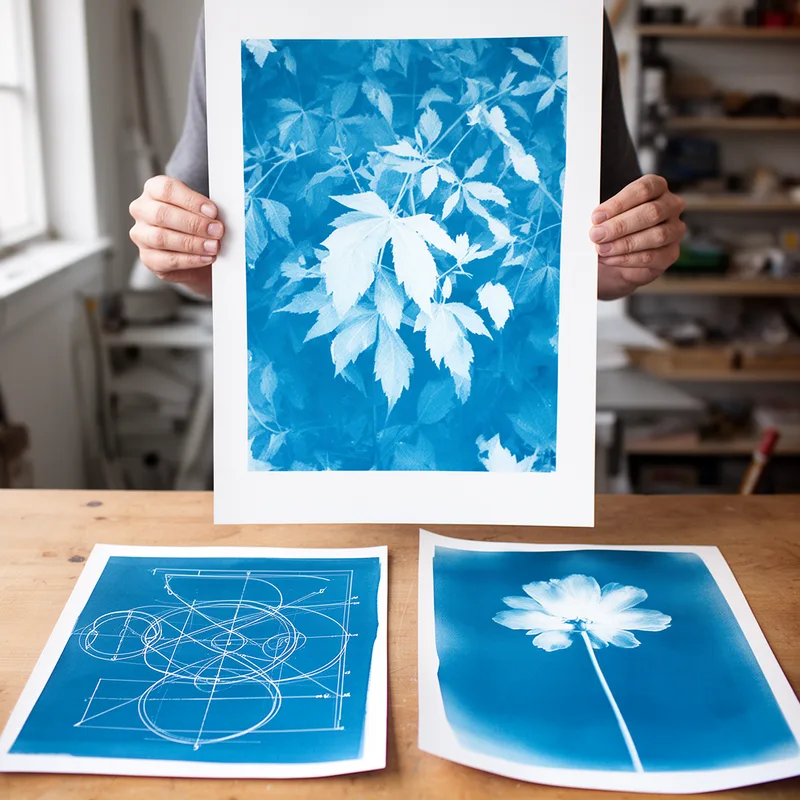
A photographic print with a vivid blue image used in art or science
- noun
- /ˈsaɪənoʊtaɪp/
- Specialized
:
cianotipo
- He developed his own cyanotypes by placing objects directly on light-sensitive paper and exposing them to sunlight.
Examples
-
The artist showcased her talent by displaying several stunning cyanotypes at the gallery, each depicting intricate botanical patterns.
-
William Henry Fox Talbot, the father of the positive/negative process, and John Herschel, who discovered the cyanotype, are just a few of the inventors who will be highlighted.
Academic text (2003) -
In science classes, students often explore the cyanotype process to create unique blueprints of leaves and flowers.
Surface Forms
cyanotype singular
cyanotypes plural
Morphology
Etymology
Cyanotype comes from the Greek word kyanos meaning 'dark blue' and the Greek typos meaning 'impression' or 'print', so a cyanotype is literally a 'blue print' and gets its name from the vivid blue image it produces.

