
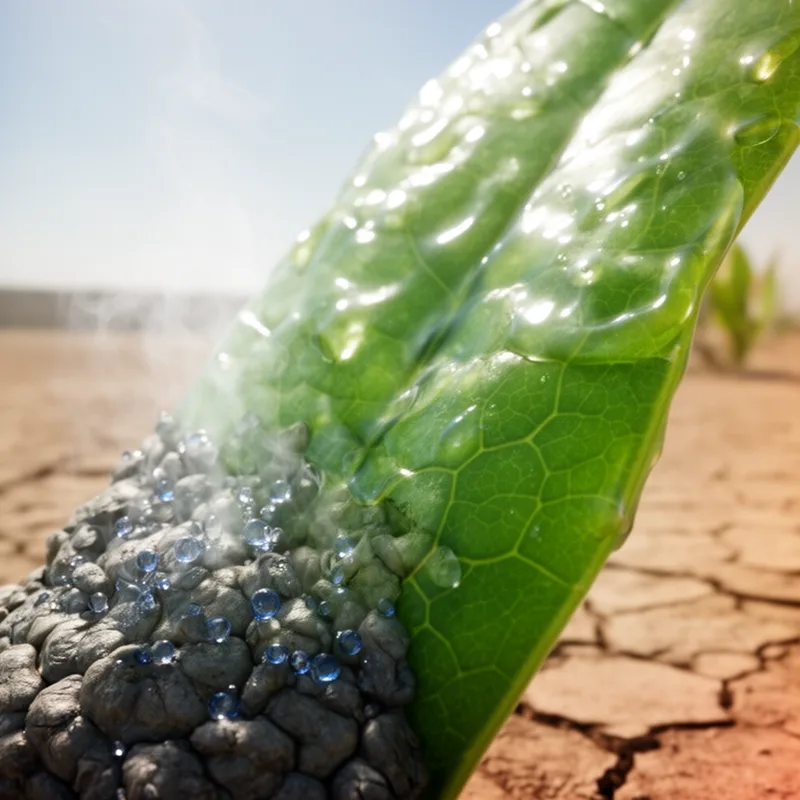
to cutinize
- verb
- Specialized
- The outer cell walls cutinize to form a protective barrier against water loss.
Examples
-
Under certain conditions, leaves may cutinize more extensively to adapt to dry climates.
-
Researchers observed that some tissues failed to cutinize properly in mutant plants.
-
The plant cells can cutinize to protect themselves.
-
Some plants cutinize their tissues to prevent water loss.
-
The outer cell walls cutinize to form a protective barrier against water loss.
-
Under certain conditions, leaves may cutinize more extensively to adapt to dry climates.
-
Researchers observed that some tissues failed to cutinize properly in mutant plants.
Surface Forms
Morphology
Etymology
Cutinize comes from cutin, the waxy material that acts like a plant 'skin', and the suffix -ize, which means 'to make' or 'to become'. So to cutinize is to make plant cells form a waxy, protective skin that helps stop water loss.

