
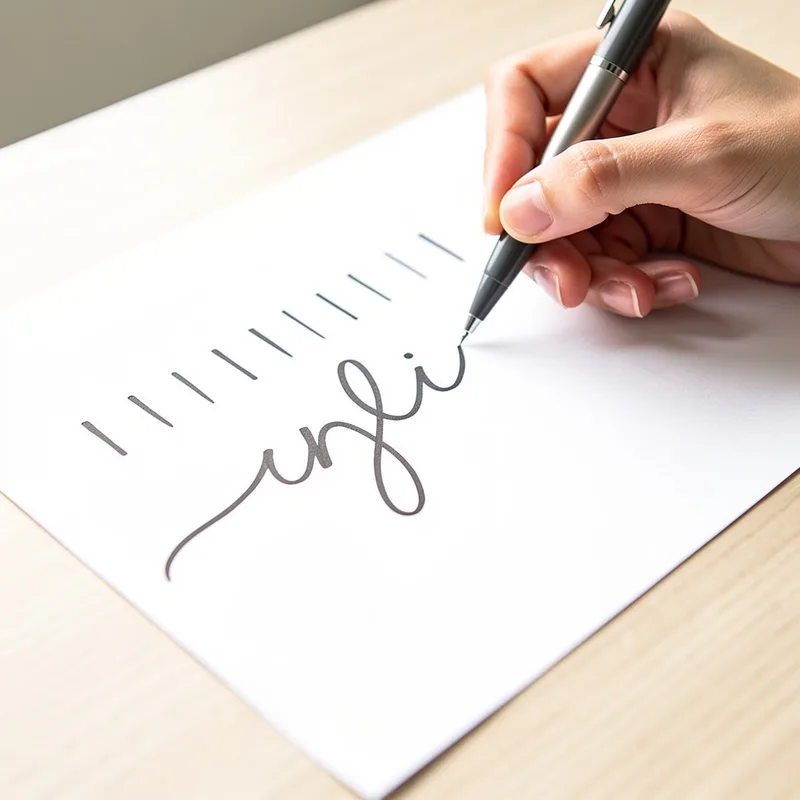
cursive
 4
4.3
4
4.3

- adjective
- /ˈkɜːrsɪv/
- Finally, the notes were handwritten in blue ink, the cursive letters sloping down to the bottom of the page.
- cursive writing
- cursive writing instruction
- cursive form
Loading YouTube…
Watch on YouTubeYou can print it or you can put it, you know, in cursive writing however you want to do it.
- You can print it or you can put it, you know, in cursive writing however you want to do it.
Examples
-
In the era of computers and standardized testing, how practical is cursive writing?
Academic text (2009) -
Usually by fourth grade, there is no continuity in cursive instruction.
Academic text (2009) -
And so it just says in cursive lower case, it's complicated.
-
Previous generations used cursive writing as an indicator of an educated individual.
Academic text (2009) -
At first glance, one might take the teaching or learning of cursive writing for granted, as a given.
Academic text (2007) -
Without mastering the skill of combining the letters, you could never master cursive writing.
Academic text (1999) -
State-mandated tests and limited classroom time have also impacted cursive instruction and writing.
Academic text (2009) -
The typeface was chosen to suggest the cursive lettering on the originals.
Academic text (2004) -
The digital age of technology increasingly threatens cursive writing because of computers, instant text messaging, emails, faxing, and employment applications.
Academic text (2009) -
The teacher demonstrated how to write each letter in cursive during the class.
Compounds



How Connected

Surface Forms
Morphology
cursive = curs + ive
Although the form can be analysed as Latin combining form 'curs-' + English suffix '-ive', 'curs' is not a standalone English base and the meaning ('letters joined in a flowing manner') is not derivable by an average B1 learner from the visible parts.
Etymology
Cursive comes from the Latin currere meaning 'to run', and it describes writing where the letters 'run' into each other and flow together.