
current account
 3
6.3
3
6.3

- noun
- /ˈkɜːrənt əˈkaʊnt/
- Specialized
- From a macroeconomic perspective, investment inflows help finance the country's current account deficit.
- current account deficit
- current account surplus
- current account balance
Loading YouTube…
Watch on YouTubeThey started to run a very large current trade surplus and a current account surplus.
- They started to run a very large current trade surplus and a current account surplus.
Examples
-
Rather than giving up on exchange rate management, many gave up on current account deficits.
Academic text (2008) -
But the IMF goal of trade balance and current account balance has not been met.
Academic text (1991) -
Exchange rates were fixed, and maintaining a positive current account position was an important goal of government policy.
Academic text (1993) -
The problem then became what to do about the current account deficit.
Academic text (1997) -
the United States runs a current account deficit and a budget deficit.
-
Unfortunately, the actual budget and current account figures for 1988 painted a less rosy picture.
Academic text (1992) -
At some point, domestic spending will be constrained, and the U.S. current account deficit will automatically decline.
Academic text (2011) -
In 2006 and 2007, the EU's current account deteriorated far more than the U.S. current account.
Academic text (2008) -
Notably, some controls on capital movements between members were allowed, although current account transactions were unrestricted.
Academic text (2003) -
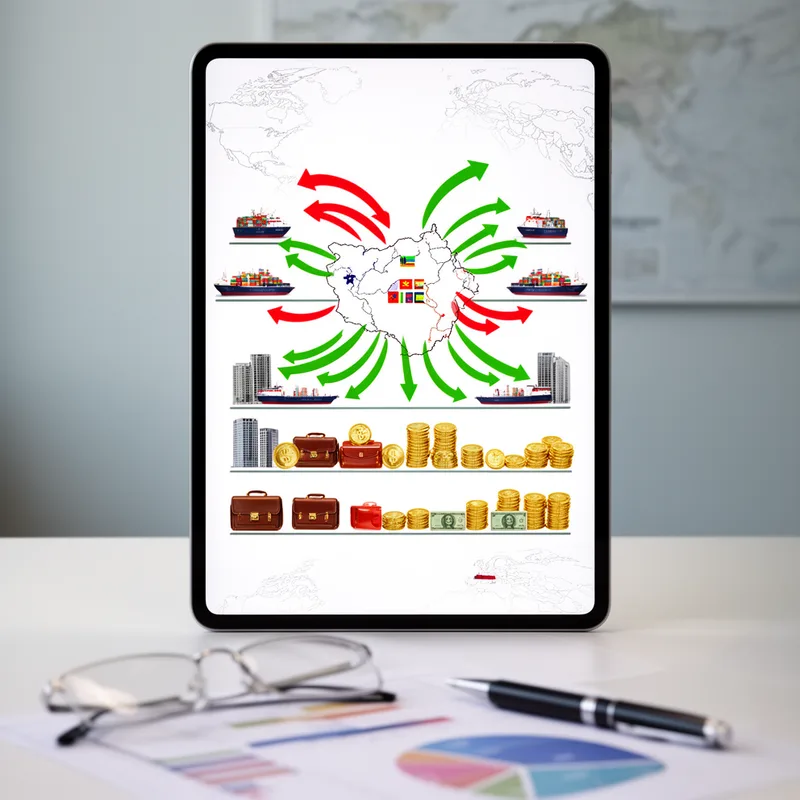
The current account measures the trade balance of goods and services for a country.
How Positive

Surface Forms
Morphology
The compound relates to 'account' and a modifier 'current' that does not straightforwardly mean 'for everyday transactions' to a learner who knows only the basic senses; 'current' is used in a conventional banking sense (similar to 'checking account') rather than the simple temporal meaning 'present'. Because the banking sense is partially motivated by the constituents but requires lexicalized, culture-specific knowledge, it is not fully predictable for a B1 learner.
Etymology
Current account uses current to mean a steady flow and account to mean a record; imagine a river current carrying goods, services and money in and out of a country. That's why it means the record of a country's ongoing international payments and transfers.