
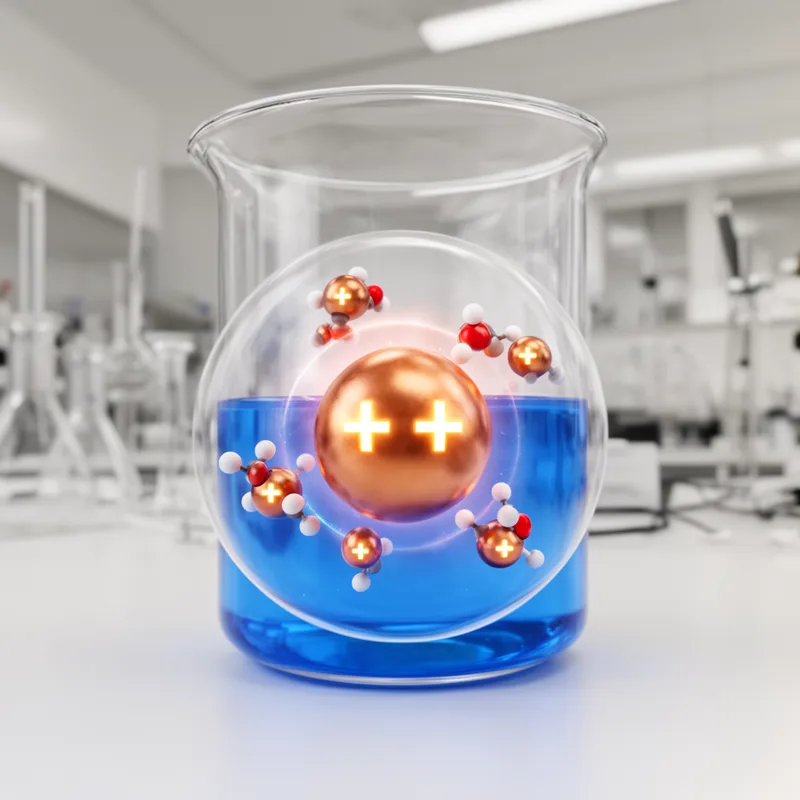
cupric


 1
9.9
1
9.9
- adjective
- /ˈkjuːprɪk/
- Specialized
- In her laboratory, she prepared a solution of cupric sulfate to test its reactivity.
- cupric sulfate
Examples
-
Cupric compounds, like cupric oxide, are often used in various chemical applications.
-
While copper metal is easily plated from an aqueous solution of its cupric salt, the as-plated copper deposit is usually rough, with large columnar grains and low ductility.
Academic text (1998) -
It's cupric oxide.
-
Paraoxon hydrochloride, cyanocabalamin, cupric oxide.
-
At the outer edge of the boundary layer, we assume that the cupric ion and the inhibitor are at their well-mixed bulk concentrations.
Academic text (1998) -
Another approach to obtaining fine-grained structures is to incorporate plating additives into the cupric plating bath.
Academic text (1998) -
The scientist explained how cupric ions play a crucial role in photosynthesis.
Compounds

- Specialized
A blue-green powder of small crystals used as a pigment and in chemistry
- Specialized
A bright blue chemical in crystals used in gardens and labs to kill fungus and test liquids
Surface Forms
Morphology
cupric = copper (semi-transparent) = cupr + ic
The form and meaning connect to 'copper', but the specific chemical valence sense ('copper(II)') is specialized and may not be deducible by a general learner.
Etymology
Cupric comes from the Latin word cuprum, named after the island of Cyprus, which was long famous for 'copper'. So, cupric describes something that 'contains copper', especially the form of copper with a positive charge of two that you often find in chemical solutions and that gives a blue color.