
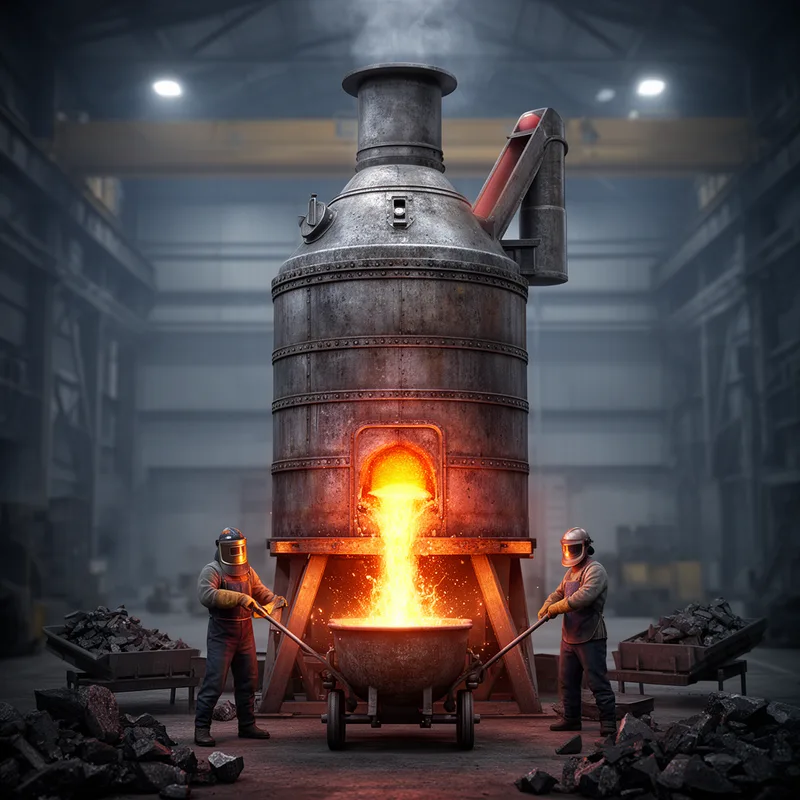
cupola
- noun
- /ˈkjuːpələ/
- Specialized
- He was called because at that time in 1831, a Mr. George Kirk had erected an apparatus for using hot-air blast in the cupola for smelting iron.
Examples
-
Although Neilson was familiar with the forge and the cupola, he had overextended himself when applying what he knew about them to the blast furnace.
Academic text (2016) -
He was ignorant of iron manufacture, and in fact, his idea had been developed in relation to smiths' forges and cupolas.
Academic text (2016) -
When the foundry's cupola furnace proved too small for making safe cannon barrels, Cuyler erected some two-story wooden buildings on the grounds to house new gun furnaces and pits.
Academic text (2007) -
Just as a single vessel was specified for heating air supplied to a smith's forge or to a cupola for melting iron, so a single vessel, but scaled up, is what Neilson stipulated for the blast furnace.
Academic text (2016) -
In the foundry, the workers fed scrap metal into the cupola to melt it for casting new parts.
-
Before beginning the pour, the operator carefully checked the temperature of the molten metal in the cupola.
-
The cupola was essential for producing the high-quality iron needed for the factory's machinery.
Surface Forms
Etymology
Cupola comes from a word like cup meaning 'small cup', and metalworkers called a tall, round furnace a cupola because it looks like a big open cup. That's why a cupola can mean the vertical furnace used to melt iron in a foundry.

