
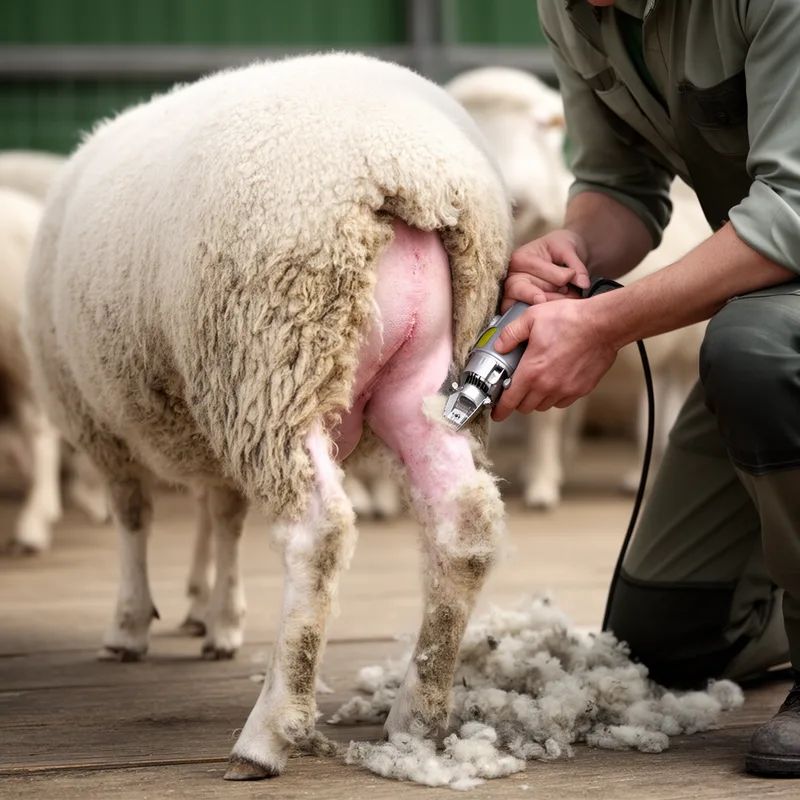
crutching
- noun
- UK
 :
recorte de lana
:
recorte de lana
- Before lambing season, the workers completed crutching to ensure the ewes were clean.
Examples
-
The farmer performed crutching on the flock to help prevent fly infestations during the summer.
-
Regular crutching is important for the health and cleanliness of sheep.
-
What is crutching?
-
She is an expert in crutching sheep to prevent flystrike.
-
During crutching, farmers carefully shear the wool to prevent flystrike and keep the sheep clean.
-
The process of crutching is essential to ensure the health and hygiene of sheep before the summer months.
-
Crutching helps maintain hygiene for sheep by removing wool from around their tails and hind legs.
How Thorough


Surface Forms
Morphology
crutching = crutch (semi-transparent) = crutch + ing
Formally a regular -ing noun from the shepherding verb 'crutch', but the specialized shearing meaning is technical and not inferable from the common 'support' sense.
Etymology
Crutching in farming is a useful word to remember by thinking of the crutch area, the small space 'between the legs' of a sheep that must be kept clean; farmers cut the wool there to stop dirt and flies. So crutching is the act of removing wool around the tail and hind legs to keep sheep healthy.