
creatinine
 7
6.9

- noun
- /ˌkriːəˈtɪnɪn/
- Specialized
- For example, patients with heart failure and altered renal function frequently have altered creatinine and urea levels.
- serum creatinine
- creatinine level
- creatinine concentration
Loading YouTube…
Watch on YouTubeSo it's most doctors are using creatinine as the measure of kidney function.
- So it's most doctors are using creatinine as the measure of kidney function.
Examples
-
So it's most doctors are using creatinine as the measure of kidney function.
-
The primary outcome measure for the study was the peak serum creatinine concentration reached during trial infusion.
Academic text (2000) -
Now, this is part of the first line treatment, so patients should have a creatinine before they start.
-
Patients with a raised serum creatinine should not be started on cyclosporin.
Academic text (1991) -
During the 2-year study, serum calcium, phosphorus, and creatinine levels did not significantly change between the treatment groups.
Academic text (2007) -
The primary endpoint was the peak serum creatinine concentration during the infusion.
Academic text (2000) -
Serum calcium, phosphorus, and creatinine levels were not significantly different between the treatment groups during the 2-year period.
Academic text (2007) -
Lab values continue to show progressive, severe renal failure, with rising blood urea nitrogen and rising creatinine.
-
During hospitalization, BUN was 29 and serum creatinine was 1.5 mg/dl.
Academic text (2007) -
The doctor explained that high levels of creatinine in the blood could indicate kidney problems.
Surface Forms
Morphology
Etymology
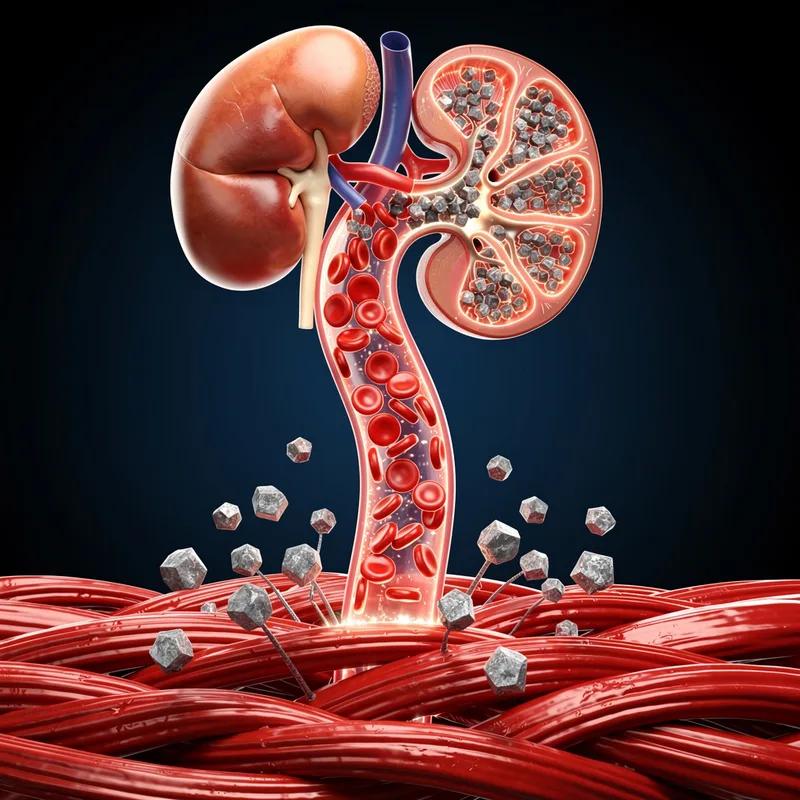
Creatinine comes from creatine, which comes from the Greek kreas 'meat', because it was first found in meat and is made by muscles. So creatinine is a small waste chemical from muscles that the kidneys must filter, and doctors check it to see how well the kidneys work.