

craniometrical
- adjective
- /ˌkreɪniəˈmɛtrɪkəl/
- Specialized
 :
craniométrico
:
craniométrico
- The researcher used craniometrical techniques to analyze the ancient skulls.
Examples
-
Her study focused on the craniometrical differences between various populations.
-
The craniometrical analysis revealed significant differences among the specimens.
-
Detailed craniometrical data were collected during the excavation.
-
Researchers conducted a craniometrical study on ancient skulls.
-
The researcher used craniometrical techniques to analyze the ancient skulls.
-
The craniometrical analysis revealed significant differences among the specimens.
-
Her study focused on the craniometrical differences between various populations.
Synonyms

About measuring skull shape and size to study people or animals
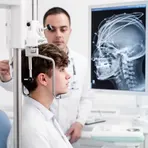
Relating to measuring the head for medical or dental care
Surface Forms
Morphology
craniometrical = craniometry (transparent) = cranio + metry + ical
The adjective is transparently formed from 'cranio-' (skull) + '-metry' (measurement) with the adjectival suffix '-ical', so the meaning is predictable from the parts.
Etymology
Craniometrical comes from Greek parts cranium ('skull') and metron ('measure'). Think of cranium (the skull) and 'meter' words like thermometer that measure things, so craniometrical means 'relating to measuring the skull'.

