
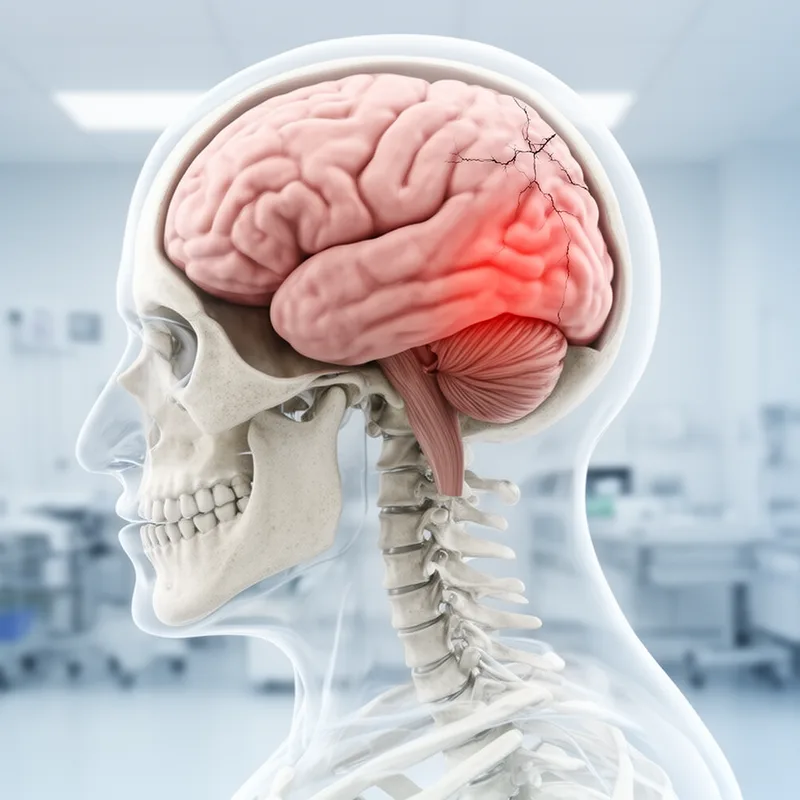
craniocerebral


 1
9.1
Relating to the skull and the brain
- adjective
- /ˌkreɪniəʊsəˈrɛbrəl/
- Specialized
:
craniocerebral
- Researchers studied the effects of craniocerebral injuries in athletes.
Examples
-
A craniocerebral infection can be life-threatening if not treated promptly.
-
The craniocerebral injury was severe and required immediate attention.
-
The doctor diagnosed a craniocerebral trauma after the car accident.
-
Doctors diagnosed him with a craniocerebral condition after the accident.
-
The doctors examined the patient's craniocerebral condition to assess the extent of the brain injury.
-
He suffered craniocerebral damage after the car accident, requiring immediate medical attention.
-
The research focused on craniocerebral injuries and their long-term effects on cognitive abilities.
Surface Forms
craniocerebral positive
Morphology
Etymology
The word craniocerebral combines crani(o)- ('skull'), as in cranium, and cerebral ('brain'). So it simply means something that relates to both the skull and the brain.