
craniate


 1
9.9
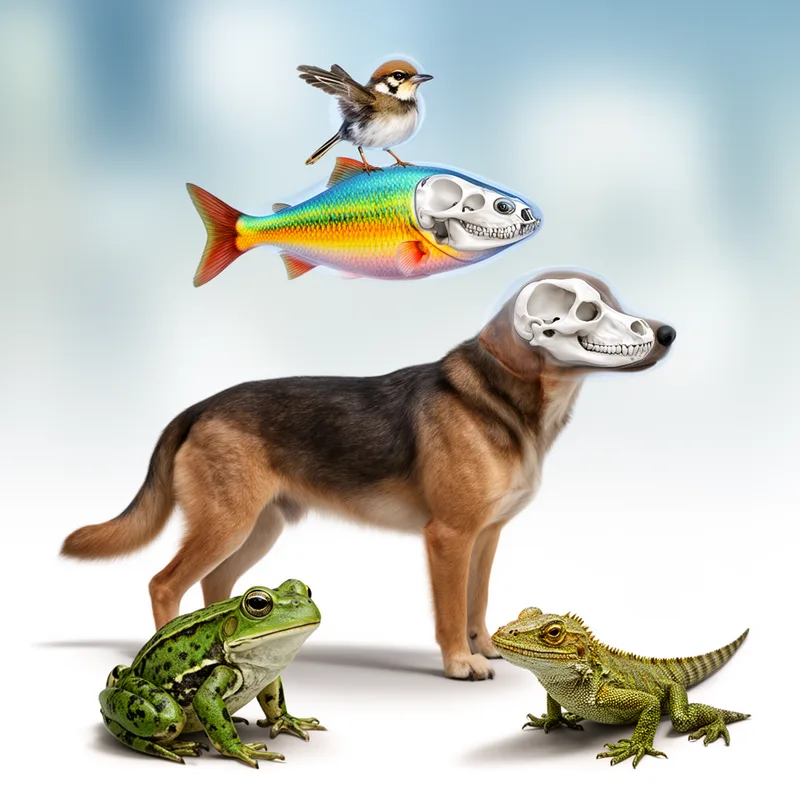
An animal that has a skull, like a mammal or fish
- noun
- /ˈkreɪniət/
- Specialized
:
craniado
- The craniate lineage includes animals like sharks, birds, and humans, all possessing a cranium.
Examples
-
Scientists study craniates to understand the evolution of vertebrates and their anatomical structures.
-
The most recent common ancestor to these "fishes" is the ancestor to the Craniata, or craniates, a group that is also an ancestor of the Tetrapoda, but is not considered fish.
Academic text (2010) -
All craniates, from fish to mammals, share the crucial feature of having a skull that protects the brain.
Synonyms

9.9
A group of animals with a skull that includes fish and mammals
is a general descriptor for any animal that has a skull
Surface Forms
Morphology
Etymology
Craniate comes from the Greek root cranium, which means 'skull'. Think of a cranium as the hard case around the 'brain', so a craniate is an animal that has that skull, which is why the word names animals with a skull.