
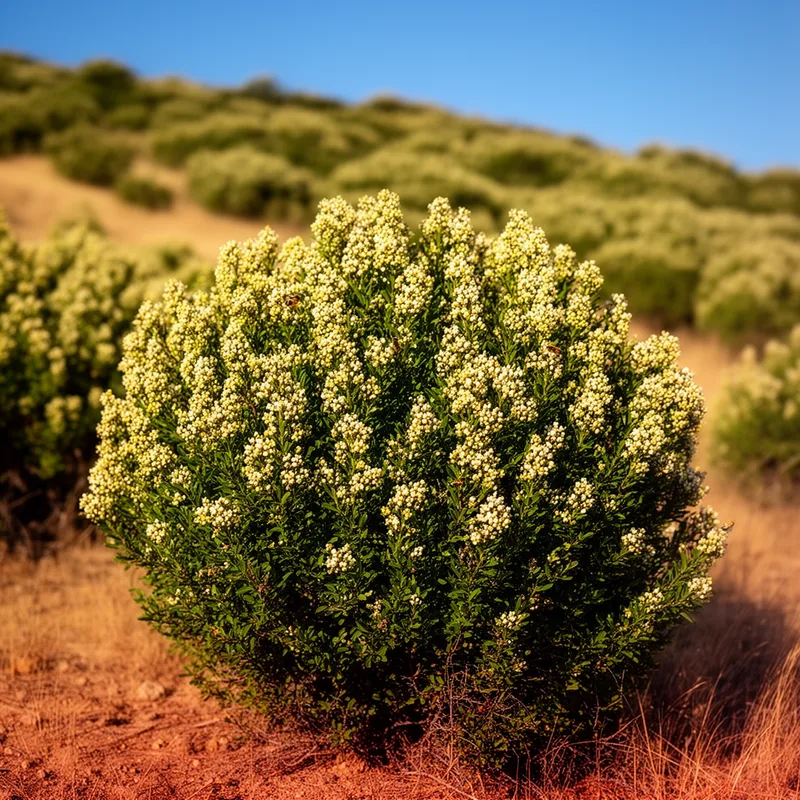
coyote bush
- noun
- /kaɪˈoʊti bʌʃ/
- US
- The coyote bush thrives in dry, rocky soil, making it a common sight in the desert landscapes of Arizona.
Examples
-
During our hike, we saw a coyote bush with vibrant yellow flowers blooming in the sunlight.
-
The garden was filled with native plants, including coyote bush that attracted many butterflies.
-
For Aaron, having been raised in Napa his whole life, it is here amongst the oaks, coyote bush, and manzanita that he is home.
Blog text (3)
Synonyms

A spreading evergreen shrub with small flower clusters that grows on California coastal hills

A spreading evergreen shrub with small flowers that grows on dry hills in the southwestern United States

A low evergreen shrub that spreads widely with many small flower clusters
A spreading evergreen shrub with small clusters of white flowers that grows in dry places
Surface Forms
Morphology
The compound 'coyote bush' transparently combines 'coyote' and 'bush' to denote a type of bush associated with or named after the coyote, so a B1 learner who knows both words can infer it is a kind of shrub. Specific botanical details (evergreen, regional distribution) are not predictable from the parts, but the basic referential meaning 'a bush/plant' is compositional and follows common naming patterns.
Etymology
The plant name coyote bush may come from the simple image of coyotes using this bush for food and shelter; people often saw coyotes eating its seeds or hiding in its branches. So the name links the animal with the plant and now means this common 'shrub' of dry western hills.

