
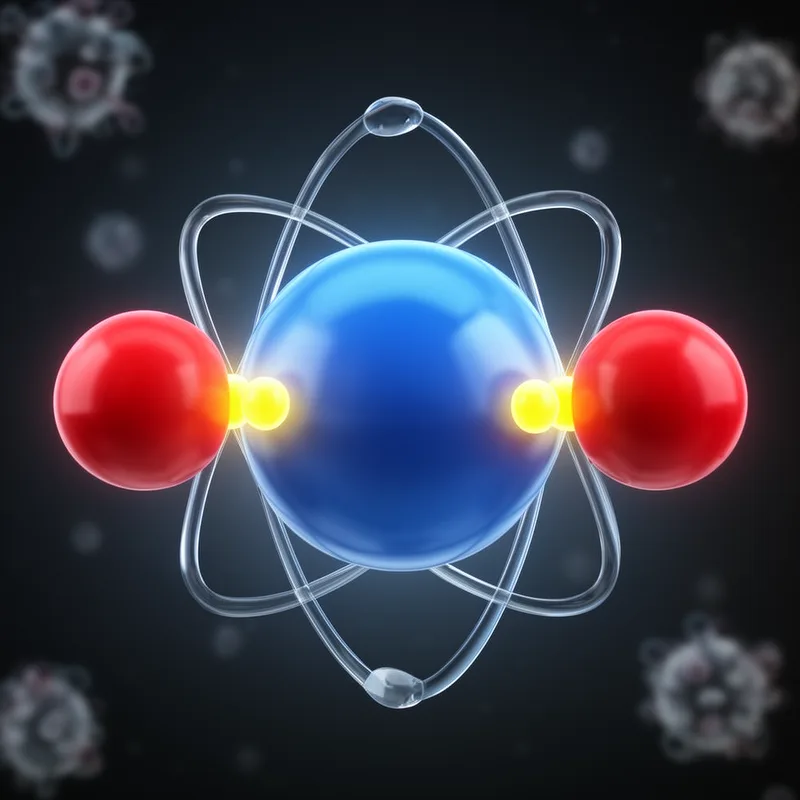
covalently


 1
7.0
- adverb
- /koʊˈveɪləntli/
- Specialized
- Because silicon is a covalently bonded material, the creation of a surface leads to broken bonds.
Examples
-
Unlike colloidal gold probes that shed some of their antibodies, Nanogold is covalently linked to Fab' fragments.
Academic text (1993) -
You know that, you know, carbon is very strongly covalently bonded to itself.
-
In other words, in nature, the claimed isolated DNAs are covalently bonded to such other materials.
Blog text (8) -
PS refers to a covalently joined sugar phosphate backbone.
-
Glycosaminoglycans are covalently linked to peptide chains to form high-molecular-weight complexes called proteoglycans.
Academic text (1995) -
Further complicating the issue, there are also sugars—disaccharides—that are compounds made of two monosaccharides covalently bound together.
Blog text (5) -
Each atom is covalently bonded to each of its four nearest neighbors; that is, each silicon atom shares its four valence electrons with the four neighboring atoms, forming four covalent bonds.
Academic text (1993) -
Thus, when cleaved, an isolated DNA molecule is not a purified form of a natural material, but a distinct chemical entity that is obtained by human intervention. "So one accepted method of showing that your molecule is a distinct composition of matter, per this decision, would be to show that the natural product is a larger molecule with additional groups covalently bonded to the structure of your claimed invention.
Blog text (8) -
A water molecule is formed when two atoms of hydrogen bond covalently with an atom of oxygen.
-
Because silicon is a covalently bonded material, the creation of a surface leads to broken bonds.
Surface Forms
Morphology
covalently = covalent (semi-transparent) = co + valent + ly
Forming an adverb from the adjective 'covalent' with the productive suffix '-ly' is a regular and easily recognized process for learners.
Etymology
Covalently comes from co- meaning 'together' and valent from a root meaning 'strength' or 'power', a bit like the word valid. So to bond covalently is for atoms to 'join together' by sharing their combining power, which in chemistry means they share pairs of electrons.