

courser
- noun
- /ˈkɔːrsər/
- Archaic
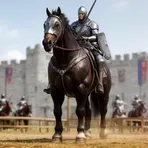
- In ancient times, a courser was essential for a nobleman, providing both speed and agility on the battlefield.
Examples
-
During the hunt, they relied on their best courser to chase down the fleeing deer.
-
Teams of plow horses pulled the wagons, and Yoren had bought two coursers and a half-dozen donkeys for the boys.
Fiction book (2000) -
The knight rode a courser into battle, demonstrating its speed and strength against the enemy.
Synonyms

 17
9.6
17
9.6

A strong, fast horse used for riding in battle
 7
9.9
7
9.9
A strong fast horse that knights ride into battle
 1
9.0
1
9.0
A strong horse trained to carry soldiers into battle

 1
9.9
1
9.9
A large strong horse that knights ride into battle or tournaments
 1
6.2
1
6.2
A horse that soldiers ride into battle
Compounds

Surface Forms
Morphology
Etymology
Courser comes from an old French word meaning a 'runner', from Latin currere 'to run', and it shares the root with course. So a strong, fast horse was called a courser because it was bred to run quickly in battle and hunts.