
cottontail
 7
5.2
7
5.2

- noun
- /ˈkɑːtənˌteɪl/
- US
- Zoologist Durward Allen once placed cottontail rabbits in enclosures with long-tailed weasels: four times a weasel killed a rabbit, and four times a rabbit killed a weasel.
- cottontail rabbits
Examples
-
They are brown early in the season, which makes them resemble cottontail rabbits.
Blog text (26) -
During interglacial periods, such as the present one, the weasels' habitat thawed out and became repopulated with warmer-weather prey, such as cottontail rabbits and water birds.
Academic text (1991) -
The state's cottontail rabbit population has been very good recently.
Blog text (26) -
There's the desert cottontail rabbit, for instance, also called the Audubon's cottontail.
Blog text (6) -
Thirty days later, the cottontail gave birth to a litter of six blind babies that she kept in a huddle in a depression in the straw.
Fiction book (1993) -
"Rabbit numbers are lower this year, but this type of decline is expected with this cycle," said Stricker. "Regardless of these cyclical changes, cottontail rabbit populations are excellent throughout Ohio and provide plenty of opportunities for a family hunting outing."
Blog text (26) -
For example, an index of the population of eastern cottontail rabbits in eastern Illinois declined 40 percent between 1956 and 1989, a direct result of the conversion of hayfields and pasture to croplands.
Academic text (1998) -
During spring, cottontails can often be seen hopping through the fields, searching for food.
-
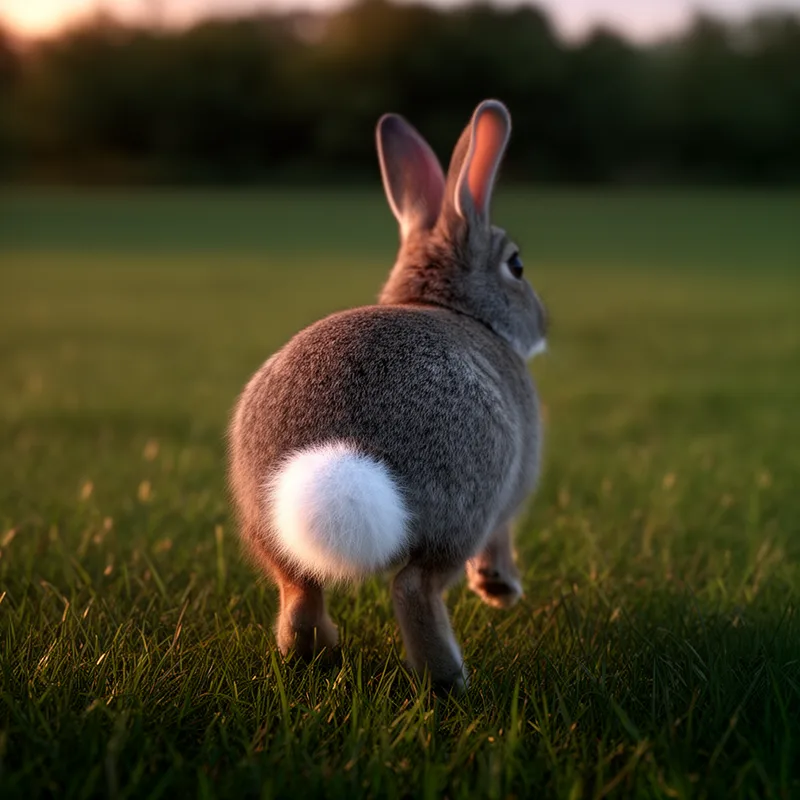
The cottontail is known for its distinctive white-tailed behind that can easily be spotted in the grass.
-
Every year, we enjoy watching the playful cottontails that visit our backyard in the early morning.
Synonyms

 1
2.0
1
2.0
A small North American rabbit with grey or brown fur and a white underside to its tail
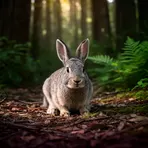
A small North American rabbit with grey or brown fur found in woods

A common rabbit with a small fluffy white tail that lives in eastern and central North America

A common rabbit with a white tail that lives in eastern parts of the United States
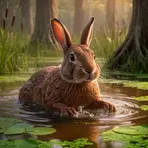
A large rabbit that lives in marshes and swims well in the southeastern United States
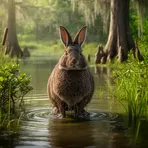
A large rabbit that lives in swamps and wet lowlands in the southeastern United States
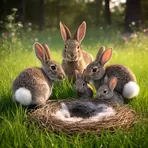
A group of North American rabbits called cottontails

A group of rabbits found in North and Central America that includes cottontails
Compounds
1
2.0
A small North American rabbit with grey or brown fur and a white underside to its tail
- Specialized
A common rabbit with a small fluffy white tail that lives in eastern and central North America
Surface Forms
Morphology
Etymology
The word cottontail is made of cotton and tail because the rabbit's small white tail looks like a puff of 'soft white fibre' like cotton, so the name tells you what the animal looks like.