

cotton bollworm
- noun
- /ˈkɑtən ˈbɔlˌwɜrm/
- UK
- Scientists are researching how to develop new strains of crops that can resist attacks from the cotton bollworm.
Examples
-
The scientists are also continuing preliminary studies of other pheromones and parasites for use against fall armyworm, beet armyworm, cotton bollworm, and other insects that attack cotton and other crops.
Academic text (1994) -
Similarly, on farms throughout China, farmers have been growing a cotton plant that is engineered to be resistant to the destructive pest cotton bollworm.
Academic text (2012) -
They feed on pests like the cotton bollworm, beet armyworm, and aphids.
Academic text (1994) -
In fact, like its "partners in crime"—tobacco budworm and cotton bollworm—it was recently added to the list of cotton pests that are showing resistance to insecticides.
Academic text (1999) -
Also known as the corn earworm, cotton bollworm, soybean podworm, or tomato fruitworm, it costs U.S. farmers nearly $1 billion annually in crop losses and control expenses.
Academic text (1995) -
They're waging war in Texas against Heliocoverpa zea, alias the corn earworm, cotton bollworm, or tomato fruitworm.
Academic text (1994) -
The cotton bollworm is a major pest that damages cotton crops across the southern United States.
-
Farmers are using various methods to control the population of the cotton bollworm, which threatens their corn yield.
Synonyms


 1
8.7
1
8.7
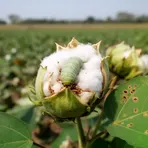
A caterpillar that eats cotton bolls and other crops
Surface Forms
Morphology
The meaning is directly compositional: 'cotton' specifies the crop and 'bollworm' names the larval pest, so a B1 learner who knows both constituents can infer this refers to a bollworm that attacks cotton. Noun+noun subtype formation (X Y = Y associated with X) is a common, cross-linguistic pattern, making the compound readily understandable from its parts.
Etymology
Cotton bollworm gives a simple picture: a small caterpillar, a worm, that lives inside the boll, the round seed pod of the cotton plant, and eats it. That's why the name means a 'pest' that can destroy cotton and other crops.