
cosecant


 1
9.9
1
9.9
- noun
- /ˈkoʊsɪkænt/
- Specialized
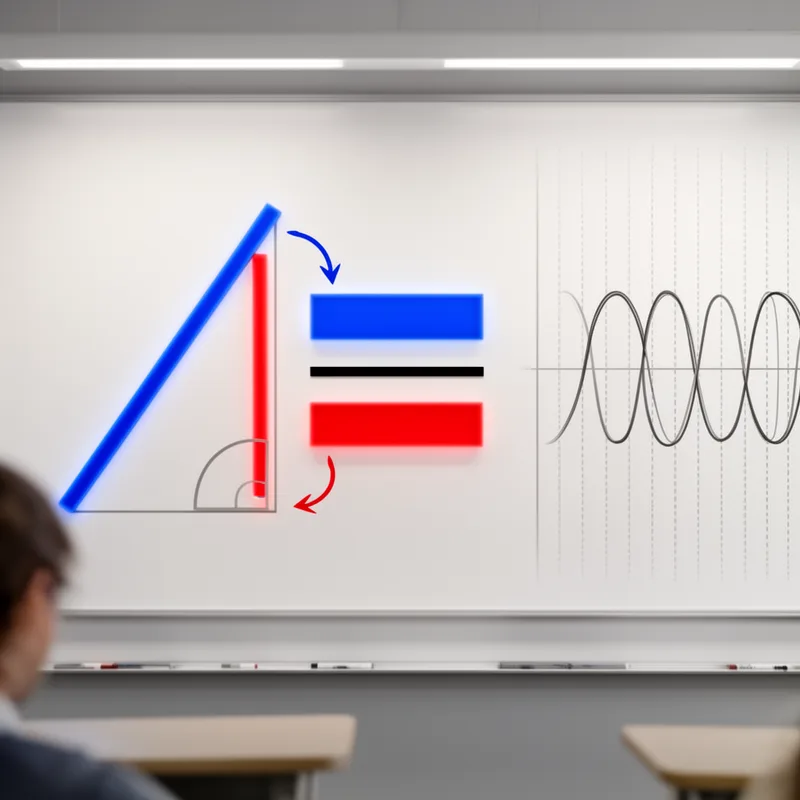
- In trigonometry, the cosecant function is often used to solve problems involving right-angled triangles.
Loading YouTube…
Watch on YouTubeThat is the fastest easiest way to find cosecant, secant and cotangent.
- That is the fastest easiest way to find cosecant, secant and cotangent.
- OK, Now I told you that cosecant is the inverse of sine, right?
- But that is what we will now put in place of cosecant Theta so that it's all in terms of X.
- This equals negative cotangents, secant, negative cosecant.
Examples
-
OK, Now I told you that cosecant is the inverse of sine, right?
-
To find the cosecant of an angle, you can take the reciprocal of the sine value for that angle.
-
It's going to give us cosecant X, oh, tangent X.
-
So this is negative lane cosecant X plus cotangent X.
-
But that is what we will now put in place of cosecant Theta so that it's all in terms of X.
-
And what graph does Cosecant look like Secant?
-
I know to be cosecant of Theta D Theta.
-
That is the fastest easiest way to find cosecant, secant and cotangent.
-
Because from here we want to remember the three other trig functions, cosecant, secant, and cotangent.
-
In a right triangle, the cosecant of an angle is defined as the ratio of the length of the hypotenuse to the length of the opposite side.
Synonyms

The number found by dividing a right triangle's hypotenuse by its opposite side
Compounds


Surface Forms
Morphology
Etymology
The word cosecant comes from the prefix co-, like in cooperate, meaning 'together' or 'partner', and from secant, which comes from a root meaning 'to cut', the same root in the word section. So, cosecant today means the hypotenuse divided by the opposite side, which is the reciprocal of the sine.