
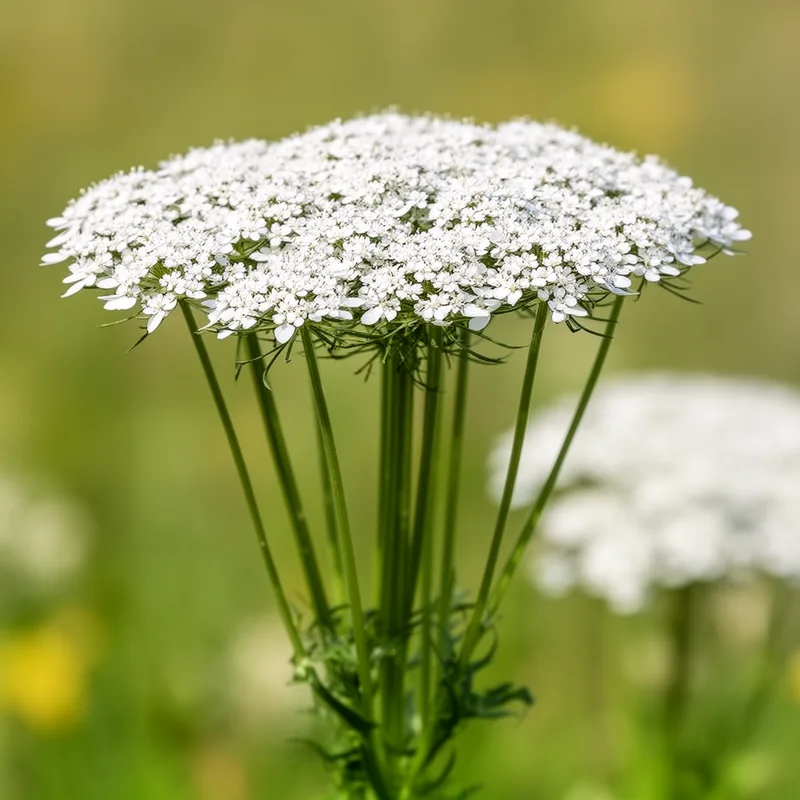
corymbose
- adjective
- /ˌkɔːrɪmˈboʊs/
- Botanists often describe certain inflorescences as corymbose because of their flattened appearance.
Examples
-
The plant produces corymbose clusters of tiny white flowers in late spring.
-
The remarkable corymbose grouping made the blossoms appear as if arranged in a single layer.
-
Look at the corymbose flowers!
-
The corymbose flowers created a stunning display in the garden.
-
The plant produces corymbose clusters of tiny white flowers in late spring.
-
The remarkable corymbose grouping made the blossoms appear as if arranged in a single layer.
-
Botanists often describe certain inflorescences as corymbose because of their flattened appearance.
Surface Forms
Morphology
Etymology
Corymbose comes from the Greek word korymbos, which means 'bunch' or 'cluster' of flowers. That's why corymbose describes plants whose flower stalks start at different places but reach the same level to make a flat or slightly rounded cluster.

