
corvee


 1
9.9
- noun
- /kɔːrˈveɪ/
- Archaic
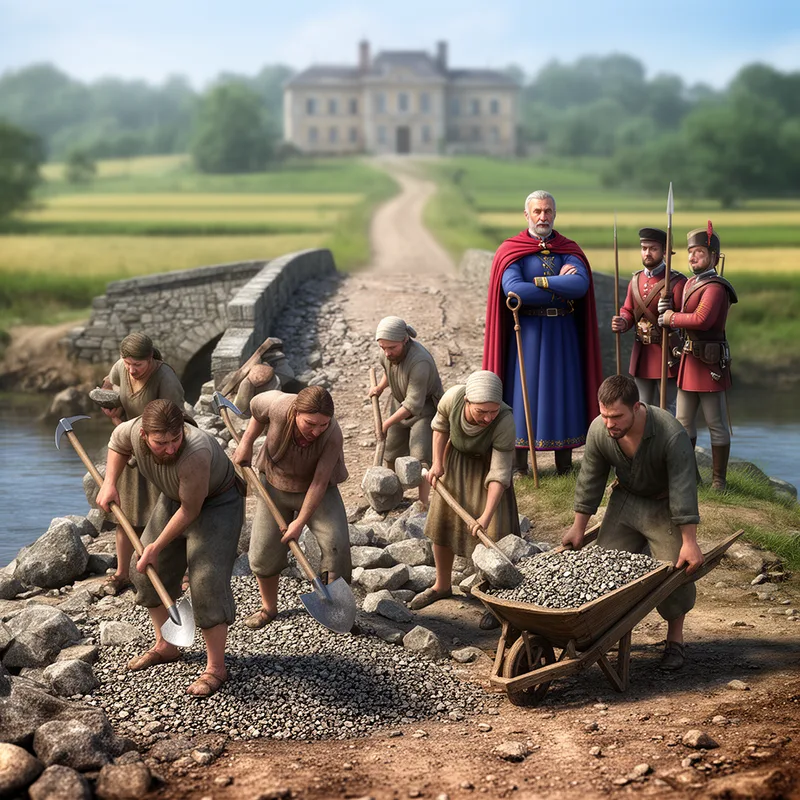
- In historical France, the nobles relied on a system of corvee labor to complete public projects without paying workers.
Examples
-
During the 18th century in Russia, moreover, corvees and military service were far more onerous than in China, where most labor services had been commuted.
Blog text (17) -
Compared with many Eastern European conditions, corvee of about 300 man-days a year for each farm was not harsh, yet it could have striking consequences.
Academic text (1995) -
The adequate work on the estate (under the corvee) and in the village made possible the degree of survival necessary to "live life" culturally.
Academic text (1995) -
Corvee and the other payments and services due to the lord and king seem to have had different effects depending on the "peasant profiles" we focus on.
Academic text (1995) -
Even though in the same period the estate intensified corvee labor, the overall rent paid by the villagers was, in relative terms, less than before if one views it in the context of increased production and better prices.
Academic text (1995) -
It was only during the reform debate on the statuting of corvee terms in the 1790s, when the peasants on a large number of estates saw their chance to voice their complaints to the King, that the peasants of the Juellund estate were politically and collectively activated.
Academic text (1995) -
Under the harsh feudal system, many peasants were forced to work as corvee laborers, fulfilling their obligations to their lords.
-
Farmers in the past often had to provide corvee services in exchange for the right to live and work on their land.
Synonyms

Work a peasant has to do for a local lord in old England
Antonyms

How Coercive
26
3.5

- Archaic
1
9.9
Surface Forms
Etymology
The word corvee comes from the French corvée, which meant 'forced work' people had to do for a ruler or government instead of paying money. So corvee today means unpaid labor or a public duty that people are required to perform.