
corpus delicti


 1
9.9
1
9.9
- noun
- /ˈkɔːrpəs dɪˈlɪktaɪ/
- Jargon
- And in the absence of convincing proof of the corpus delicti... ...I move this indictment be wiped off the records... ...and the charges against these defendants be dismissed.
- proof of the corpus delicti
- establish the corpus delicti
Examples
-
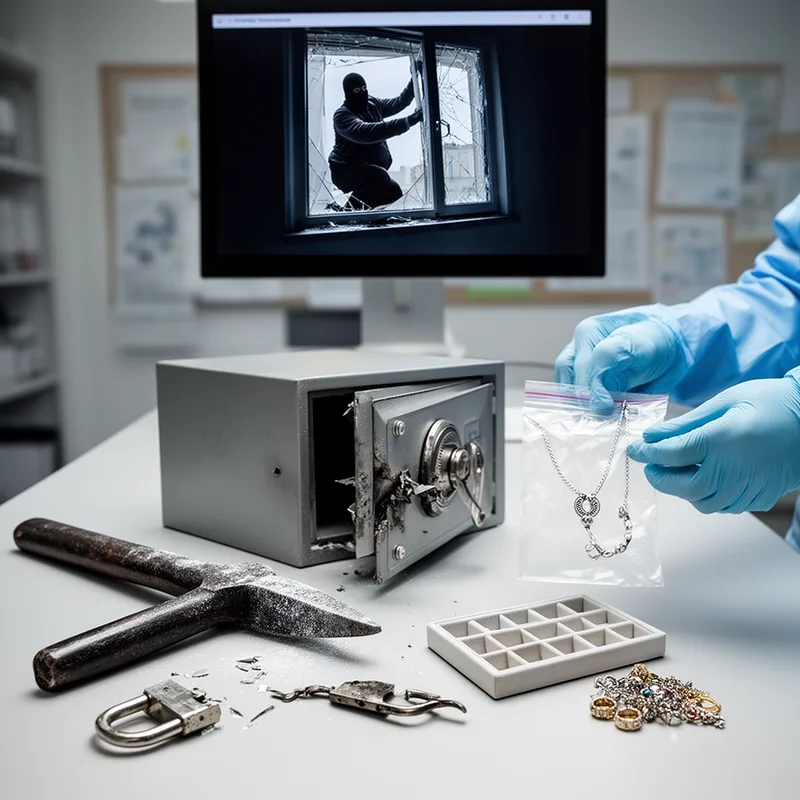
Absent a body, a prosecutor needs every advantage to establish the corpus delicti, the objective proof that a crime has been committed or a prima facie showing that the alleged victim met death by a criminal agency.
Academic text (1995) -
Without clear evidence, it was impossible to show the corpus delicti required for a conviction.
-
That was far short, however, of establishing the corpus delicti.
Academic text (1995) -
- There's such a thing as corpus delicti.
-
- DA says there's no corpus delicti.
-
Rather, most jurisdictions require independent proof of the corpus delicti; the corroborating evidence must prove the commission of the crime.
Academic text (1995) -
The law is that the corpus delicti must be established... ...at least by fragments of the human body... ...or of articles known and proved to have been worn by the deceased.
-
In one nobody case on record, the prosecutor, lacking a strong corpus delicti, filed kidnapping and aggravated assault charges instead.
Academic text (1995) -
Furthermore, under the common law rule of corpus delicti, a corpse was nearly always required to prove homicide, and even then, causation was especially difficult to demonstrate.
Academic text (2016) -
In order to charge him with murder, the prosecution needed to establish the corpus delicti through reliable evidence.
Surface Forms
Morphology
corpus + delicti
This is a Latin legalism rather than a compositional English phrase: the constituents ('corpus', 'delicti') are not familiar English words to a B1 learner and the phrase refers to the legal concept of evidence that a crime occurred rather than a literal ‘body’. Because the term is a specialized, borrowed legal idiom whose meaning cannot be predicted from its surface parts by typical learners, it is opaque.
Etymology
The legal phrase corpus delicti comes from Latin and literally means corpus ('body') and delicti ('of the crime'). Think of a crime's 'body' as the facts and evidence that show a crime happened, and without that 'body' you cannot prove the crime.